ORA-01031: insufficient privileges On ASM – Grid Infrastructure 11gR2

Today like any other day started with customer call , Telling me There is problem on Grid infrastructure after restarting both node, They change heartbeat from cables to connected on switch after i told them to do this.

The Error in the logs like the  below :-
CRS-5011:Check of resource “+ASM” failed: details at “(:CLSN00006:)”

Node #2 was running without any problem , the issue was with node #1 and nothing changed recently.

The Error in Node #1 :-

crsctl start cluster

PRCR-1079 : Failed to start resource ora.asm
ORA-01031: insufficient privileges
CRS-5017: The resource action “ora.asm start” encountered the following error:
ORA-01031: insufficient privileges
. For details refer to “(:CLSN00107:)” in “/u01/app/grid/11.2.0.4/log/lux335/agent/ohasd/oraagent_oracle/oraagent_oracle.log”.

as you see from the above error “ORA-01031: insufficient privileges” i was running this command as root.
After check node #1 the solution so simple :-

Under $GRID_HOME/network/admin
vi sqlnet.ora

SQLNET.AUTHENTICATION_SERVICES = (NONE)

which is wrong and to be changed to the following value :-

SQLNET.AUTHENTICATION_SERVICES = (NTS)

Reboot Node #1 and everything running successfully.

Thank you
Osama mustafa

OTech Magazine 2014

Independent magazine for Oracle technology professionals. OTech Magazine will be published digitally four times a year. Every season. 

The first edition will be published Fall 2013. OTech Magazine articles are written by the Top-100 consultants in the Oracle-field around the globe. Only selected authors can publish in OTech Magazine.

OTech Magazine offers insight in complex Oracle projects and solutions.

My Article Included in this Version of OTech Magazine You Can Check The Magazine Here

 I Want to take this Opportunity to Thanks Douwe Pieter for his great efforts.

Thank you 
Osama Mustafa 

Managed Server ERROR: transport error 202: bind failed: Address already in use

ERROR: transport error 202: bind failed: Address already in use
ERROR: JDWP Transport dt_socket failed to initialize, TRANSPORT_INIT(510)
JDWP exit error AGENT_ERROR_TRANSPORT_INIT(197): No transports initialized [../../../src/share/back/debugInit.c:750]

This Error Appeared when trying to start Managed server the Log Shown the above error, which already clear, in my case i have 2 managed server SOA and OSB in the same AdminServer each of them trying to access on the same PID process using Node Manager to solve this issue please follow the below steps.
Solutions :-
  • Inside Domain Path for example /u01/app/fmw/domains/Base_domain/bin
  • Edit setDomainEnv.sh and search for the below :-

if [ “${DEBUG_PORT}” = “” ] ; then
        DEBUG_PORT=”8453″
        export DEBUG_PORT
fi

if [ “${SERVER_NAME}” = “” ] ; then
        SERVER_NAME=”AdminServer”
        export SERVER_NAME
fi

  •  Add New Lines under the above to contain server name and available DEBUG_PORT on the server like the below:-

if [ “${SERVER_NAME}” = “soa_server1” ] ; then
   DEBUG_PORT=”7453″
   export DEBUG_PORT
fi

if [ “${SERVER_NAME}” = “osb_server1” ] ; then
   DEBUG_PORT=”7454″
   export DEBUG_PORT
fi

 Now Restart AdminServer and Try to start Managed Server, Take Backup from setDomainEvn.sh before editing.

Thank you
Osama mustafa

Enable SSH On Windows EM12C Purpose

Uploading Agent to windows/Linux needs ssh Port to be open and enabled, ssh not enabled on windows by default and do it Cygwin should be installed.

Configure Cygwin so simple, follow the below steps :-

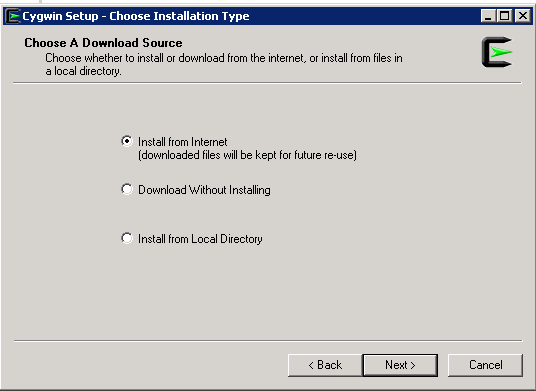
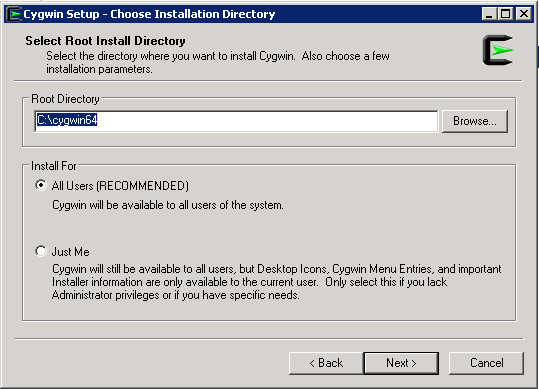
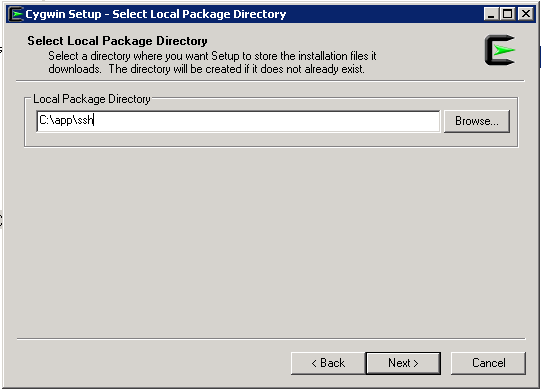
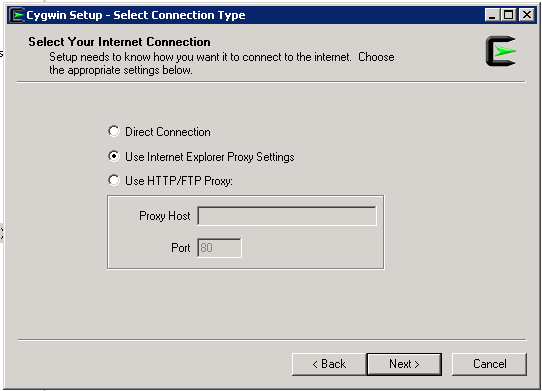
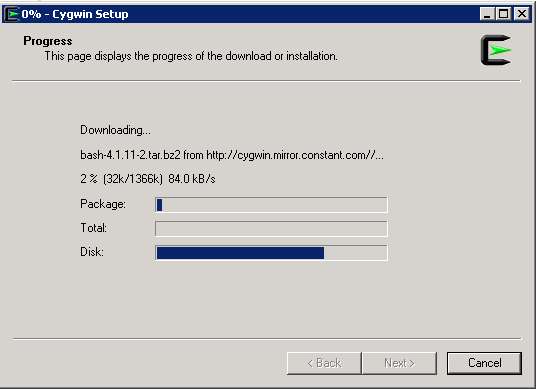
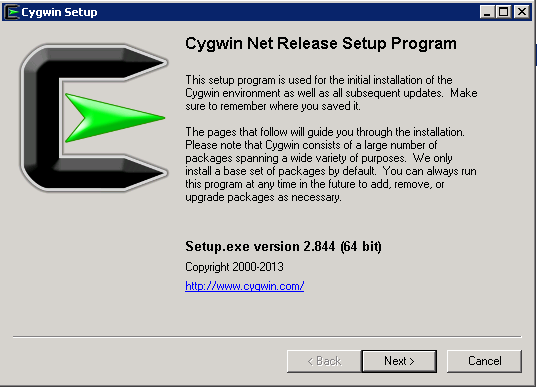
Download Cygwin from Here, Upload File to the windows Server and Run the setup.

SSH Package should be chosen while installation.
After Installation Run cygwin terminal as Administration ( Right click on the icon and Choose the option )
Now Enable ssh should be done by run below command :-

/usr/bin/ssh-host-config

Should privilege separation be used? (yes/no) yes
new local account ‘sshd’? (yes/no) yes
Do you want to install sshd as a server? Yes
Enter the value of CYGWIN for the daemon: [] (DON’T ENTER ANYTHING, PRESS ENTER)
Do you want to use a different name? (yes/no) no
Create new privileged user account ‘cyg_server’? (yes/no) yes
Please enter the password: ENTER YOUR PASSWORD HERE
Reenter: RE-ENTER YOUR PASSWORD

Using Command Prompt ( cmd )

Start ssh by –> net start sshd
Stop ssh by –> net stop sshd

Another way posted by my friend Maaz you can check it here.

Thank you 
Osama Mustafa

Download Agent in EM12C manually

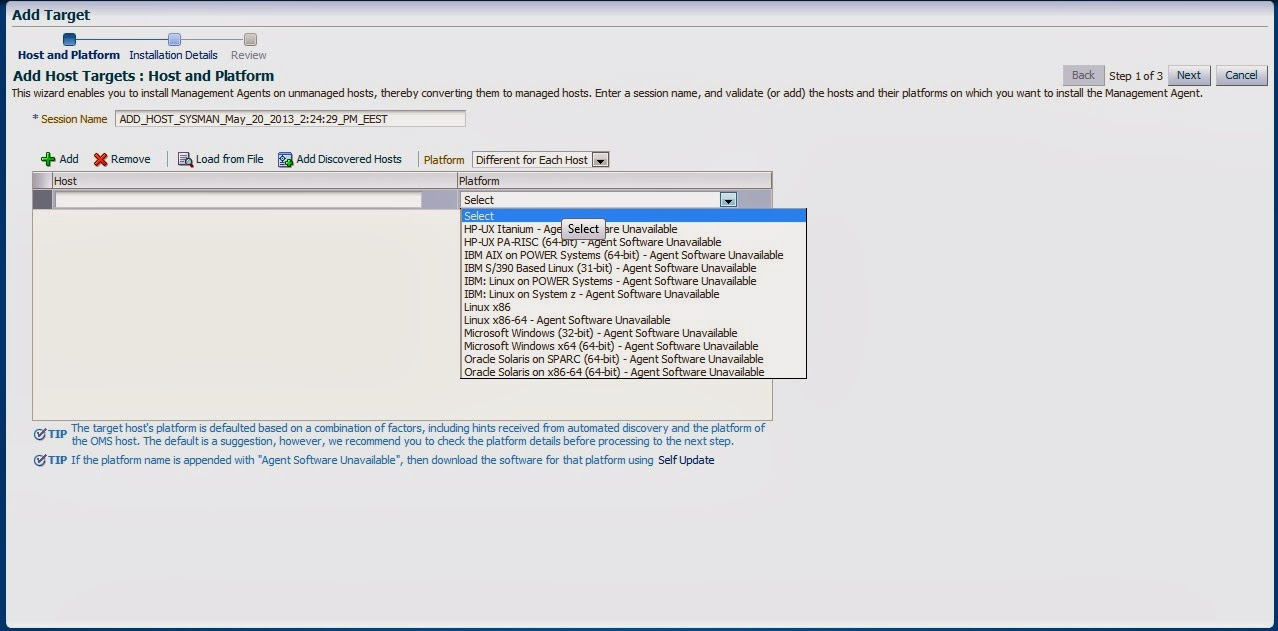
Adding target to EM12C needs to install agent to the Target Host Depend on Operating system, the agent is now always available which mean install Agent for this operating system is necessary, the below picture describe the above case :-

Enterprise manager cloud 12c contains two different type of Connection mode online and offline, this blog describe how to install manually :-

From Setup –> extensibility –> Self Update

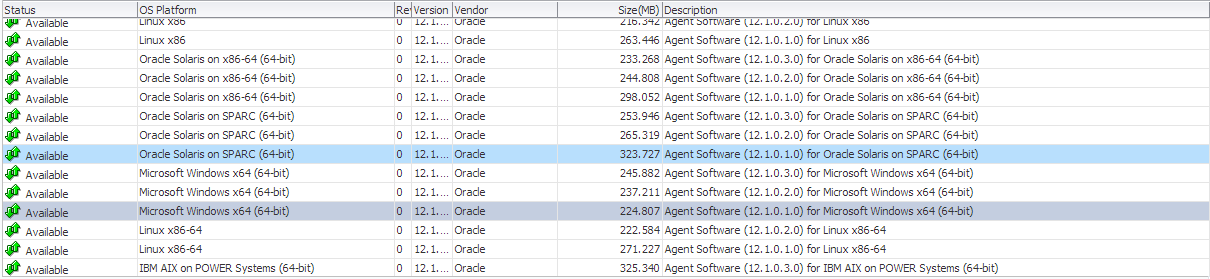
Press On Agent Software., The below screen will appear :-

By pressing any of those agent new pop up will open included with link to download, copy the link and upload the file to OMS Host and run the below command :-

[oracle@EM12C emcli]$ ./emcli import_update -omslocal -file=….

File Path should be provided in the above command.

The output :-

Processing update: Agent Software – Agent Software (12.1.0.1.0) for Microsoft Windows x64 (64-bit)
Successfully uploaded the update to Enterprise Manager. Use the Self Update Console to manage this update.

After Run the above command Successfully, Back to Self Update screen –> Agent Software and Apply the Download Catalog by press apply.

Thank you
Osama mustafa

Oracle Database 12c Backup and Recovery Survival Guide

Oracle 12c Released in July 2013, and with every release for new oracle database version we expect huge amount of book to be released also, Books Talking about new Features, Administration, RAC, Data Guard,and finally Backup and Recovery.

When I am looking  for Oracle book it should have three Main things at least :

  • Description ( Table Of Content )
  • Examples for the new features.
  • Cover The specific topic and cover it so well.
Recently i received an email from Packt Publishing WebSite Here to review A book for Oracle 12c Related to Backup and Recovery, the Book Title

            ” Oracle Database 12c Backup and Recovery Survival Guide”

The above book written  by two oracle experts

  • Francisco Munoz ( Oracle ACE Director )
  • Aman Sharma ( Oracle ACE )
And Trust me when i am saying i need another post to talk about these two author. the books contain an amazing information for every DBA, it’s not necessary to be an expert to buy this book because they already covered everything from beginning with Examples or should i say with Lot of examples, what i would say here i recommended this book because it’s contain best practice for Backup and Recovery Covered by two Oracle Experts.
Description for Table Of Content :

Chapter 1: Understanding the Basics of Backup and Recovery 
First Chapter describe the Backup basic, why the backup is very important and what is the most common issue 

Chapter 2: NOLOGGING Operations
I have to say this chapter give me new idea about Nologging, and describe Best Solution for Nologging and Logging Operating in Database. 
Chapter 3: What is New in 12
Discuss 12c New Feature Related to Backup and Recovery ( RMAN,Datapump .. ) and simple description about multitenant Features and Architecture. 
Chapter 4: User-managed Backup and Recovery
Describe All kind of backup,Offline,cold and hot with Examples and Description for these example.

Chapter 5: Understanding RMAN and Simple Backups
This Chapter Describe RMAN Architecture & RMAN Concept Backup and how to use RMAN with oracle 12c,how to backup Controlfile, Spfile and Archive log,how to use Fast Incremental Backup. 
Chapter 6: Configuring and Recovering with RMAN
This Chapter Covered how to configure database for backup and recovery and how to configure RMAN for Backup, All the configuration covered by Examples and Lot Of scenarios.Configuration for Compression backup,snapshot and authentication for RMAN.

Chapter 7: RMAN Reporting and Catalog Management
From the Name of this chapter it’s covered RMAN Catalog and Report command and List command to get query and check backup.

Chapter 8: RMAN Troubleshooting and Tuning

This is Excellent Chapter for All DBA it’s Contains information how to troubleshoot RMAN,Tune RMAN, and how to monitor RMAN Session , Useful for Every DBA.
Chapter 9: Understanding Data Pump
This Chapter talking about Data Pump Architecture and Examples how to move data use data pump.
Chapter 10: Advanced Data Pump
If you want to move to next level and Increase your knowledge about Data pump , this chapter contains topics every DBA needs such as create small copies of production, create database in different file Structure, Moving Object from one table space to another and other excellent topics.

Chapter 11: OEM12c and SQL Developer
Enterprise manager 12c and Sql Developer friends for DBA, and Have been used started to used by DBA’s  All the above chapter using the command Line, but this one describe how to use these Two Tools to Configure backup and monitor backup, using export/import with EM12c.

About the Author :

has over two decades of experience in consulting, analysis, support, implementation, and migration of Oracle products. He is also an expert in most phases of a database life cycle, for example, development, stabilization, security, backup and recovery, tuning, installations, and data warehouse (ETL) with excellent implementation and support methodologies. He is a popular speaker at many Oracle conferences around the world.

is an Oracle Database consultant and instructor. He holds a Master’s degree in Computer Applications and has been working with Oracle Database for over a decade. His main focus is to understand how Oracle Database works internally. Besides the core database, he has a very strong knowledge of Linux, Solaris, Oracle RAC, Data Guard, RMAN, Oracle Exadata and Oracle Enterprise Manager.


You can Order the Book Now :

Finally i would thank Francisco & Aman for this amazing Book.

Thank you 
Osama Mustafa

Change SQL Developer Java Home

If you want to change the Java Home for SQL Developer , You Have to Locate product.conf and set JAVAHOME to the new one.

On Linux :

Usually it’s Located in /home/oracle

cd ./sqldeveloper/4.0.0/
Edit Product.conf
and Search For setJavaHome to new One

 On Windows : 

It’s Depend on user :

C:\Users\Osama\AppData\Roaming\sqldeveloper\4.0.0
and edit the same file.

Thank you
Osama Mustafa

Change OHS Port On Linux to Work on 80

Operating system : Oracle Linux 6.4
Oracle WebTier OHS 11.1.1.7

if you want to configure OHS ( WT ) to work on port 80 ( http ) avoiding insert Port.

For Example :

OHS default Port is 7777, if you want to leave it like this any call for the server should be like this :

http://:7777/console  

But if you are using port 80 you have to do the below :

http:///console 

But on Linux if you need to use port 80 you have to be root, to do this follow the below step :

  • As root user :

[root@TST-WT1 bin]# pwd
/u01/fmw/Oracle_WT1/ohs/bin 

[root@TST-WT1 bin]# chown root .apachectl
[root@TST-WT1 bin]# chmod 6750 .apachectl

  • As Oracle User

[oracle@TST-WT1 ~]$ cd /u01/fmw/admin/config/OHS/ohs1/ 

[oracle@SCADNP-WT1 ohs1]$ ls http*
 httpd.conf      

  • Edit the file using any Editor and modify Listen from 7777 to 80
  • Restart OHS using opmnctl command.

——–+———-+———–+——
ohs1                             | OHS                |   15732 | Alive    |  677601509 |   510840 |   0:00:11 | https:9999,https:4443,http:80
Thank you 
Osama Mustafa