Oracle Error : ORA-31003/ORA-06512

The Below Error Appear when you are trying to use dbms_network_acl_admin

ORA-31003: Parent /sys/acls/File_name.xml already contains child entry
ORA-06512: at “SYS.DBMS_NETWORK_ACL_ADMIN”, line 226
ORA-06512: at line 30
ORA-01403: no data found

The Solution Is Simple

exec dbms_network_acl_admin.drop_acl(‘/sys/acls/file_name.xml’);
Commit
Re-Run Script Again.

Thank you
Osama Mustafa

Upgrade R12.1.1 To R12.1.3

To Upgrade Oracle EBS R12.1.1 To R12.1.3 Follow the Below Steps :

From https://support.oracle.com you have to download the following patch :

  • p9239090_R12_LINUX_1of6.zip
  • p9239090_R12_LINUX_2of6.zip
  • p9239090_R12_LINUX_3of6.zip
  • p9239090_R12_LINUX_4of6.zip
  • p9239090_R12_LINUX_5of6.zip
  • p9239090_R12_LINUX_6of6.zip
  • p9239095_R12_GENERIC.zip
  • p9822544_R12.MSC.B_R12_GENERIC.zip(Optional)
  • p10349415_R12.AD.B_R12_GENERIC.zip (Optional)
  • p9239089_R12.AD.B_R12_LINUX.zip
Before Start Working You have to shutdown all application Services using  ( adstpall.sh ) and enable maintenance mode using adadmin 
Run the Patch in Order like the following, before apply Any Patch you need to check README.txt for any Pre-Install Step/Post-Install Step 
1- Start with patch Number 9239089 , before do that on Readme.txt you have to do the below :
-Open Two Session ( Terminal ) Run Apps Env On Terminal #1, Terminal #2 run database Env.
-On DB Terminal Create under $ORACLE_HOME/Appsutil/admin 
-Copy adgrants.sql (Unix)  from patch folder to Above folder.
-From $ORACLE_HOME/appsutil/admin Run adgrants.sql
-sqlplus /nolog
-SQL> @$ORACLE_HOME/appsutil/admin/adgrants.sql
2-Apply Patch 10349415
3-Apply Patch 9239090
4-Apply Patch 9239095
5-Apply patch 9822544 
6-Apply Patch  9817770 
7-Apply Patch 9966055
After you Applied all the above patch Do the below steps :
On Application Tier :
  • Run Autoconfig ( Which is Located $ADMIN_SCRIPT_HOME )
  • Run the admkappsutil.pl ( Located in $AD_TOP/bin/admkappustil.pl ) Using the below command 

perl /bin/admkappsutil.pl

This will generate new appsutil.zip located in  $INST_TOP/admin/out

On Database Tier :

Copy appsutil from Application tier to $ORACLE_HOME,Unzip in under $ORACLE_HOME Like the below

  • cd $ORACLE_HOME
  • unzip appsutil.zip
  • Run autoconfig for Database Tier located in ( $ORACLE_HOME/appsutil/admin) –> adauto.sh
Finally two more simple step, you need to run adpreclone on Database Tier & application Tier using the below command :
  • perl adpreclone.pl dbTier (located in $ORACLE_HOME/appsutil/admin)
  • perl adpreclone.pl appsTier (Located in $ADMIN_SCRIPT_HOME)
Disable Maintenance mode now. 

Sqlplus apps/***
SQL> select release_name from fnd_product_groups;
RELEASE_NAME
————————————————–
12.1.3

Start Application Services using ( adstrtall.sh )

Thank you
Osama mustafa

Oracle Security Topic, what you should be Afraid of ?

Again !!!!

SQL injection Occur when someone ( Hackers ) Writing Web application code that access to your database this code contain special format.

As DBA you need to understand who access to database and corporate with developers and make sure they are connect in secure way. and Use good SQL statement to avoid SQL injection, because of this Don’t relay on your firewall always make sure you secure your database and your code before start working on firewall, i am not saying here firewall will not protect your database yes it will but don’t forget now these days we have devices and complex network wireless, IPAD , Mobiles , Devices and Laptop are connected to your network, so in that case firewall will not protect you 100%, secure for better reasons 🙂

Users connect to database using Listener, Even database is down and listener is up user can still open connection to database ( which is caused the problem ) you can access to the server because there is no authentication way in listener, lot of examples on this type of attackes.

to solve this issue you need to Patch & patch OS and Database to ensure all security bugs and fixed.

there’s different type of oracle vulnerabilities Buffer overflow , listener issues , misunderstanding configuration and PL/SQL which indicate to SQL injection. most of our fears is not outside hackers/attacker it’s internally such as employee, hacking lessons online on internet and free everyone want to try it where mostly in work, in 2008 reports indicate that 26% of hacking issues happened because employee ignorant.

Company ignore security side because Resource such as money and consultant but they will not do that after they get hacked and lose everything data and customer information.

Most of the company has network administrator and system administrator so if you secure OS & network well your database will be secure.

Thank you
Osama Mustafa


" java.lang.UnsatisfiedLinkError" When Run Oracle EBS

Exception in thread “main” java.lang.UnsatisfiedLinkError: /u01/media/StageR12/startCD/Disk1/rapidwiz/jre/Linux_x64/1.6.0/lib/i386/xawt/libmawt.so: libXi.so.6: cannot open shared object file: No such file or directory
at java.lang.ClassLoader$NativeLibrary.load(Native Method)
at java.lang.ClassLoader.loadLibrary0(Unknown Source)
at java.lang.ClassLoader.loadLibrary(Unknown Source)
at java.lang.Runtime.load0(Unknown Source)
at java.lang.System.load(Unknown Source)
at java.lang.ClassLoader$NativeLibrary.load(Native Method)
at java.lang.ClassLoader.loadLibrary0(Unknown Source)
at java.lang.ClassLoader.loadLibrary(Unknown Source)
at java.lang.Runtime.loadLibrary0(Unknown Source)
at java.lang.System.loadLibrary(Unknown Source)
at sun.security.action.LoadLibraryAction.run(Unknown Source)
at java.security.AccessController.doPrivileged(Native Method)
at sun.awt.NativeLibLoader.loadLibraries(Unknown Source)
at sun.awt.DebugHelper.(Unknown Source)
at java.awt.Component.(Unknown Source

This error appear while trying to  ./rapidwiz in Oracle EBS , and it’s regarding to Wrong packager version

First you need to remove the old package using :

rpm -e –nodeps

Install the required package from the below link :

Package libXi 32bit Here
Package libXi 64bit Here

Re Run the Installer again

Enjoy

Thank you
Osama Mustafa

Which module You installed on Apps

Sometimes you need to check which module you installed in oracle E-business suite and to do that there’s more one way :

using Query / as Apps User :

SELECT a.application_name,a.product_code,
DECODE (b.status, ‘I’, ‘Installed’, ‘S’, ‘Shared’, ‘N/A’) status,
patch_levelFROM apps.fnd_application_vl a,
apps.fnd_product_installations b
WHERE a.application_id = b.application_id
and b.status=’I’ order by product_code asc;

Using adutconf.sql scripts which is located in $AD_TOP

This script include information about Product installation status, version and other information.

Using Oracle Application Manager ( OAM )

Site Map —> License Manager Which licensed word means installed.

Simple

Thank you
Osama Mustafa

Step By Step Remove Oracle Table Lock

All your query should be done using sys user or system user, after that you need to find Session SID with below query :

SQL> SELECT SESSION_ID
  2  FROM DBA_DML_LOCKS
  3  WHERE NAME = ‘EMP_INFORMATION’;

Where EMP_INFORMATION is Table_name

Output :

SID
___
424

Next step it’s talking about How to find Serial# :

SELECT SID,SERIAL#
FROM V$SESSION
WHERE SID IN (SELECT SESSION_ID
FROM DBA_DML_LOCKS
WHERE NAME = ‘EMP_INFORMATION’)

Output :

SID                SERIAL#
—-                 ——-
424                 1103

Use Alter system To kill this session :
ALTER SYSTEM KILL SESSION ‘SID,SERIALl#’;

Thank you
Osama mustafa


Configure Email Notification and Incidents Rule

Before I talked about how to Install and Add Target in Enterprise Manager 12c today i will talk how to enable Email notification and Incidents Rule Step By Step and as usual you can download the article as PDF file :

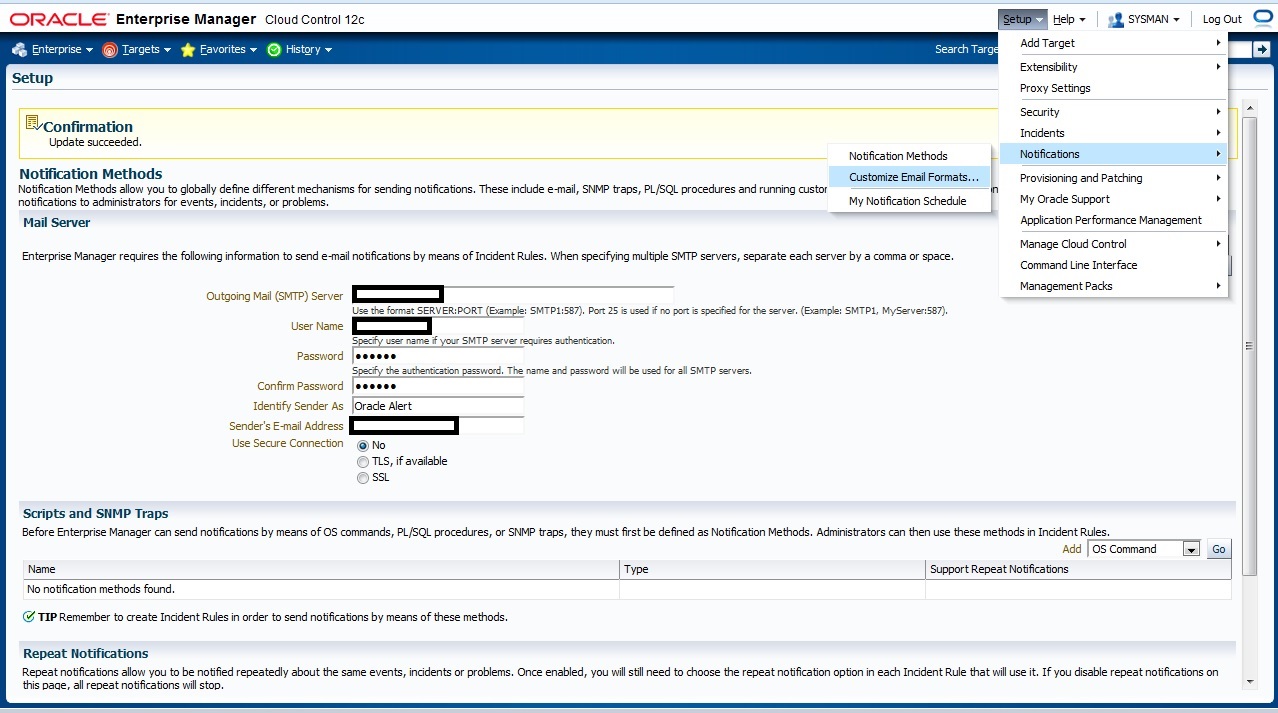
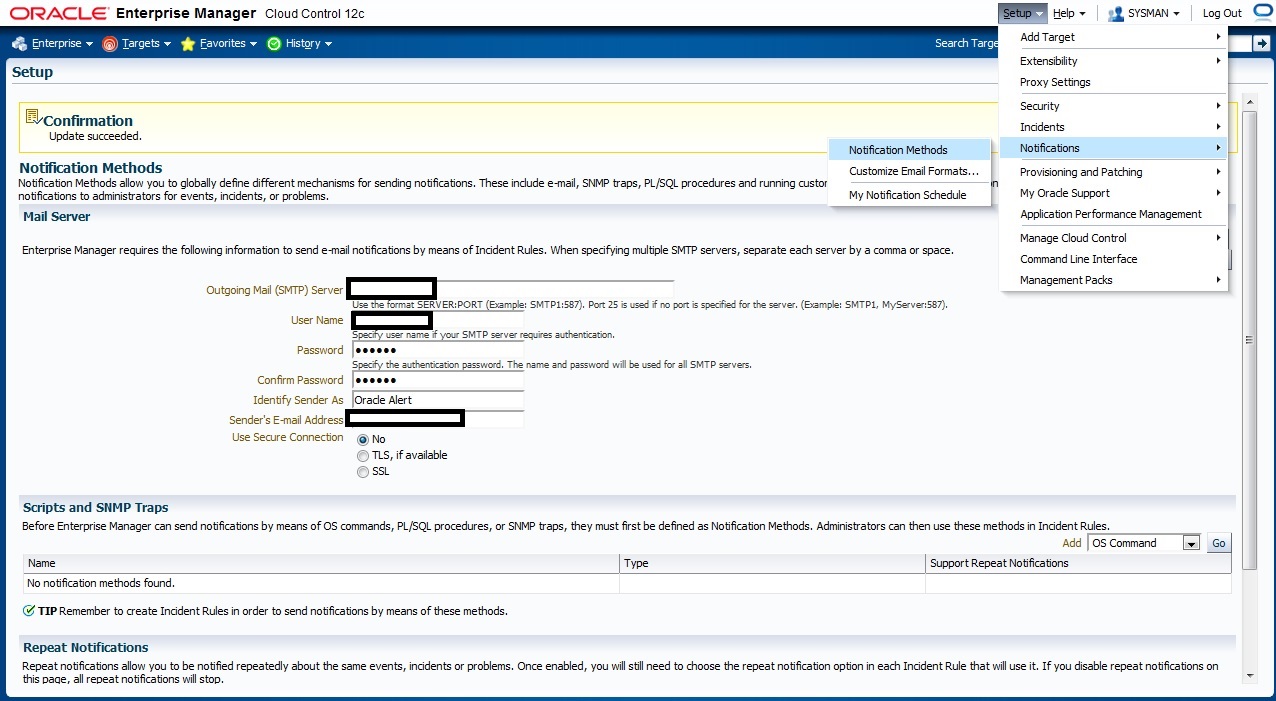
Check the below picture the fill with Correct Parameter to enable email notification First

If you need to customize your Email format that will be deliver to you go to the below section in em12c :

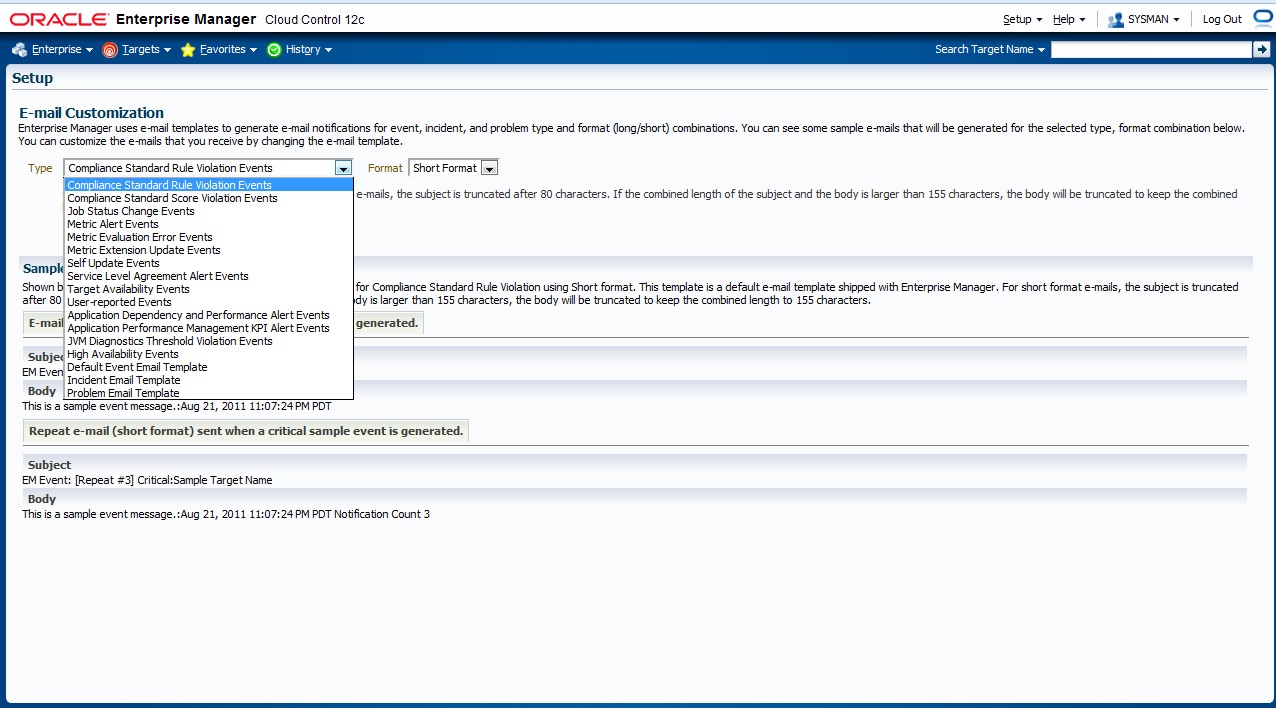
The Below Page will appear to you choose which Type you want to customize

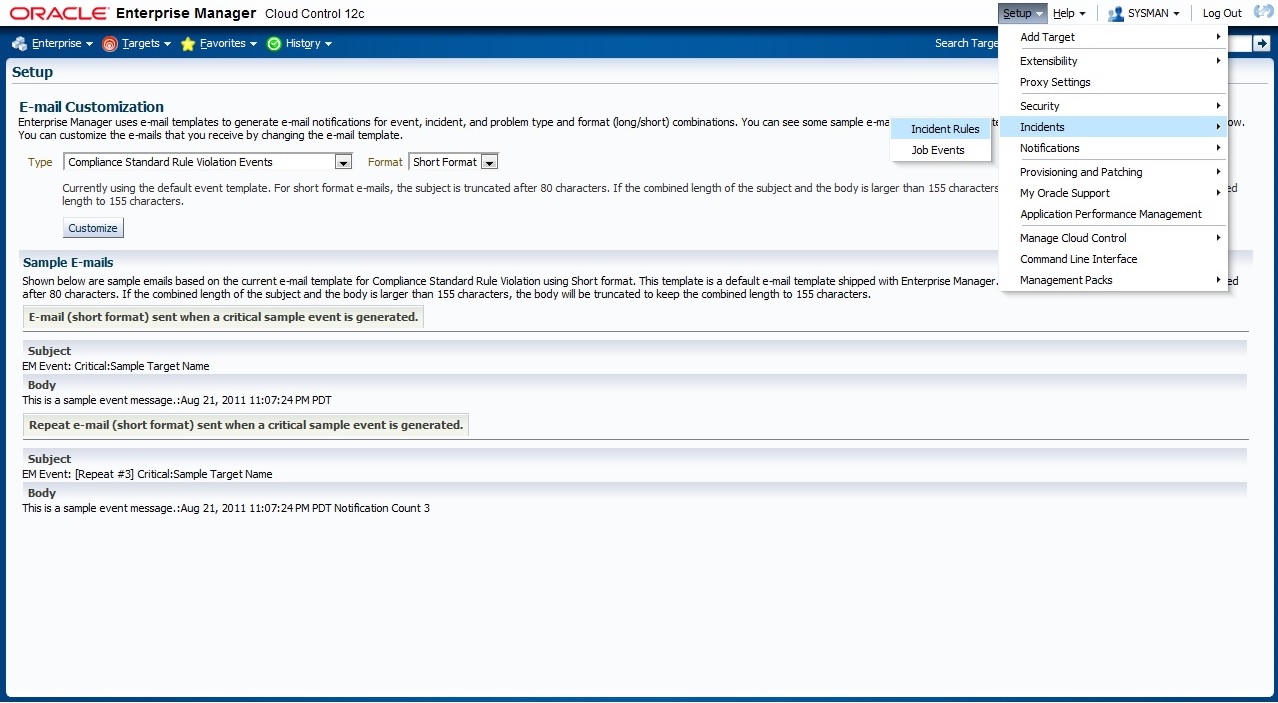
now Let’s work On Incident Rules, From Setup –> Incidents –> Incident Rules

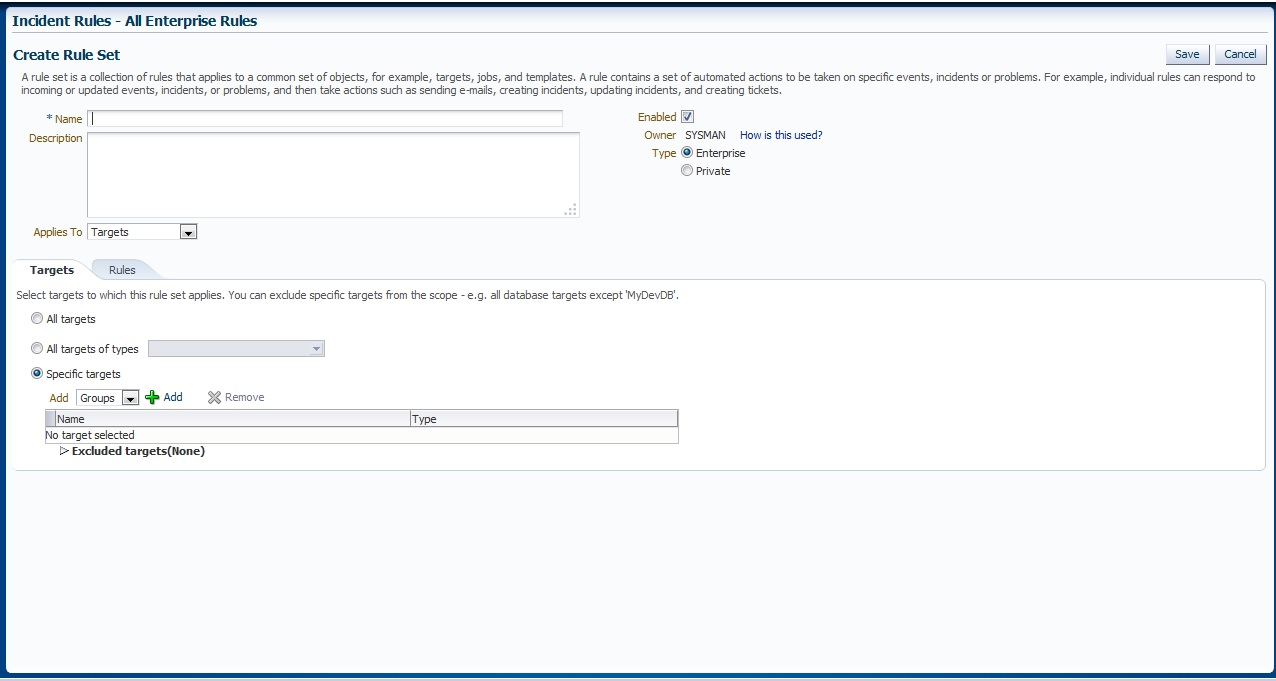
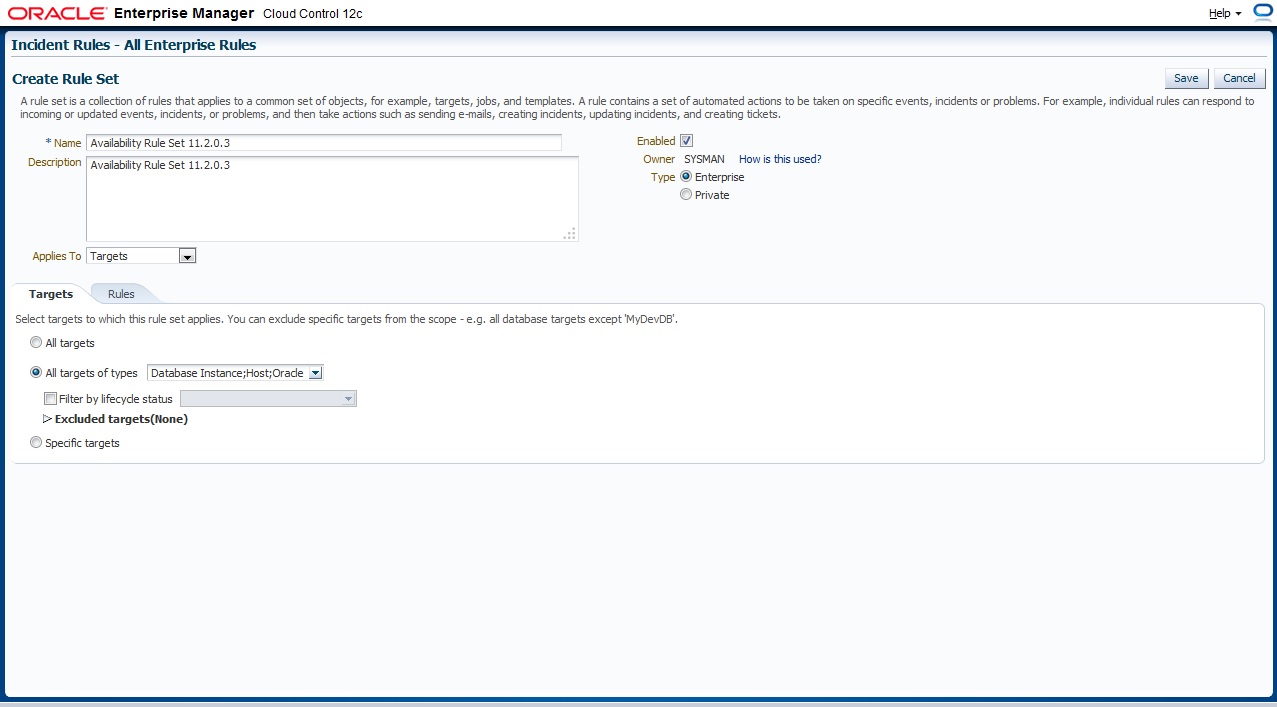
New Page will appear With Some Content All you have to do is Press “Create Rule Set” and below page will appear, Choose the name for Rule Set, which target this Rule set will be applied

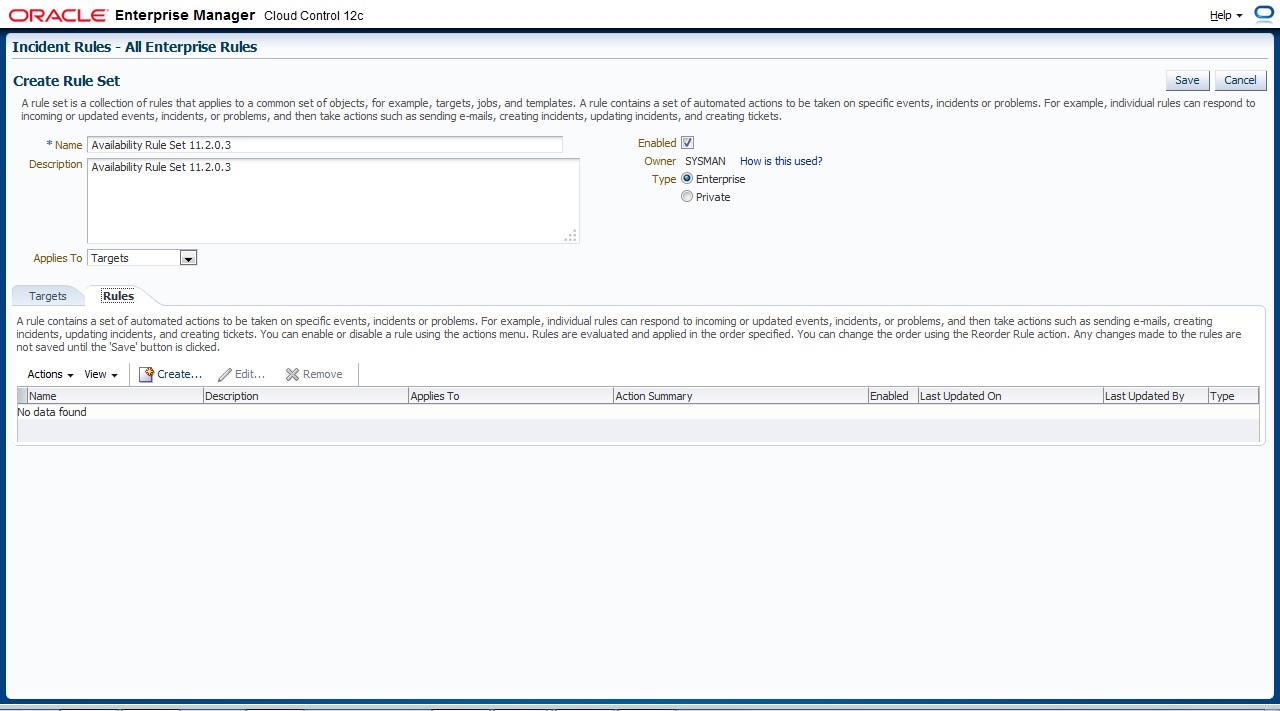
On Second Tab ” Rule” Press Create to add new One

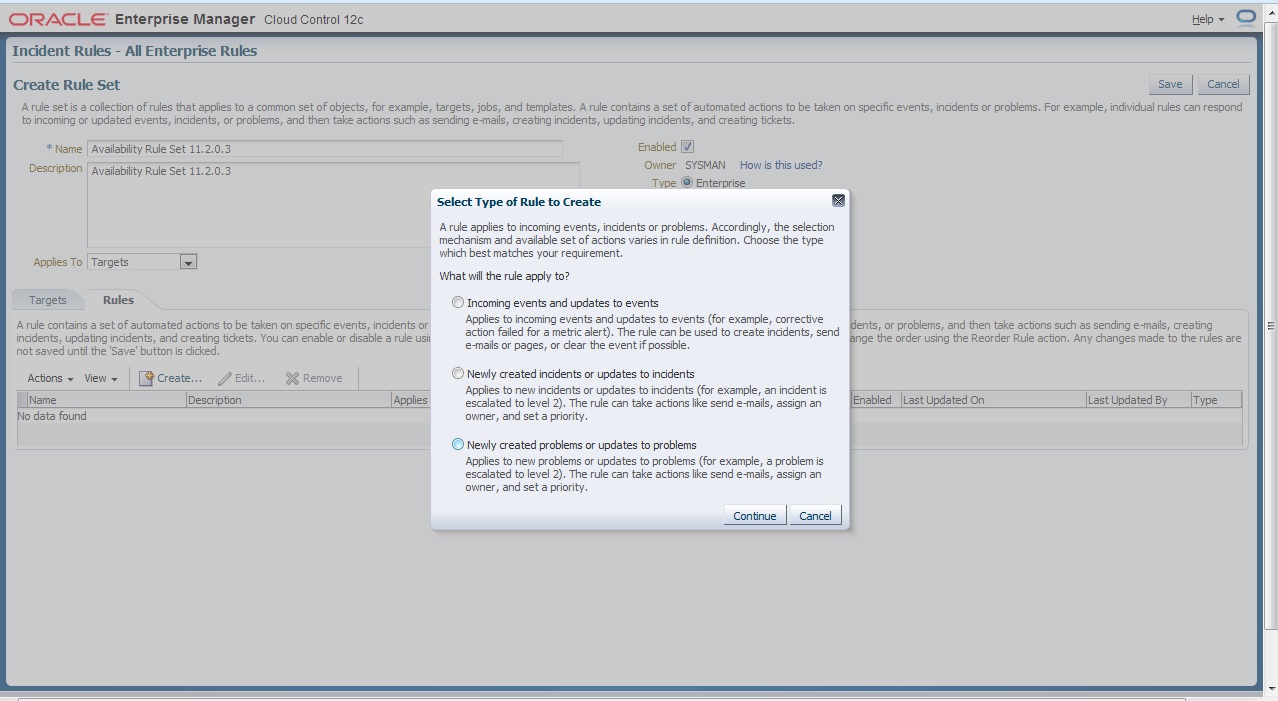
There’s Description for each Type I will choose the first one

After That follow the instruction to create your own Rule Set ,
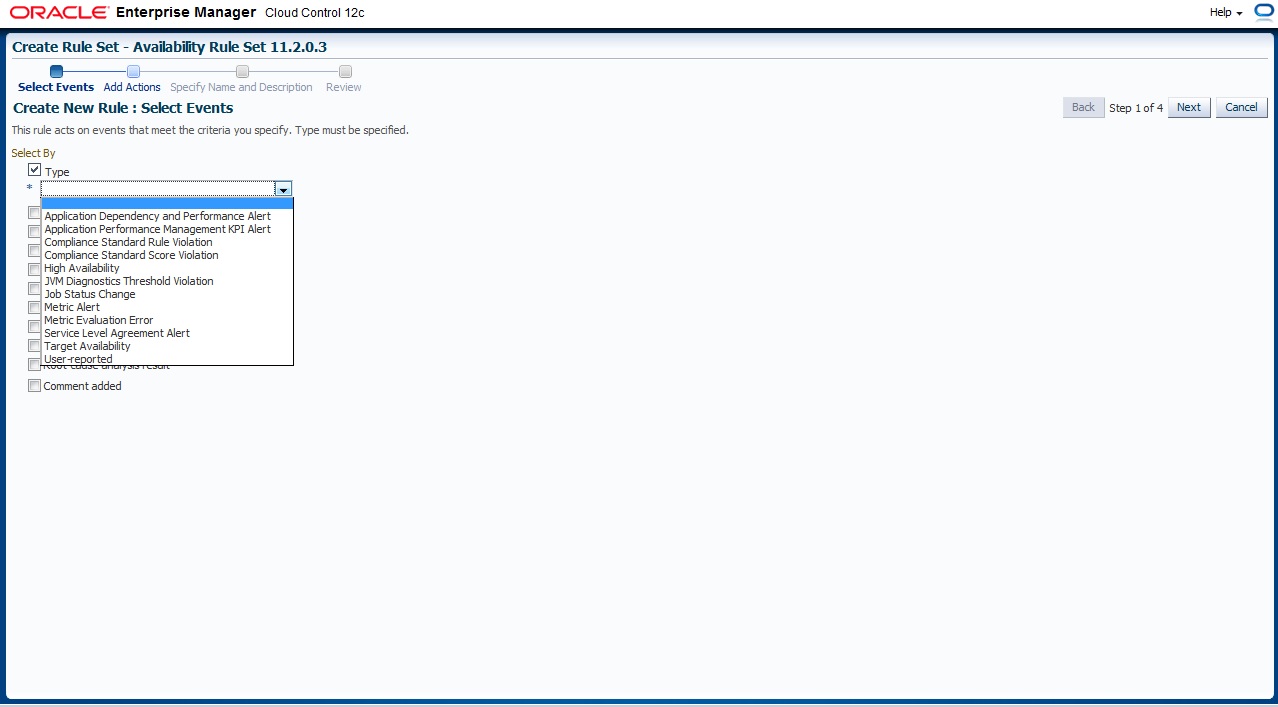
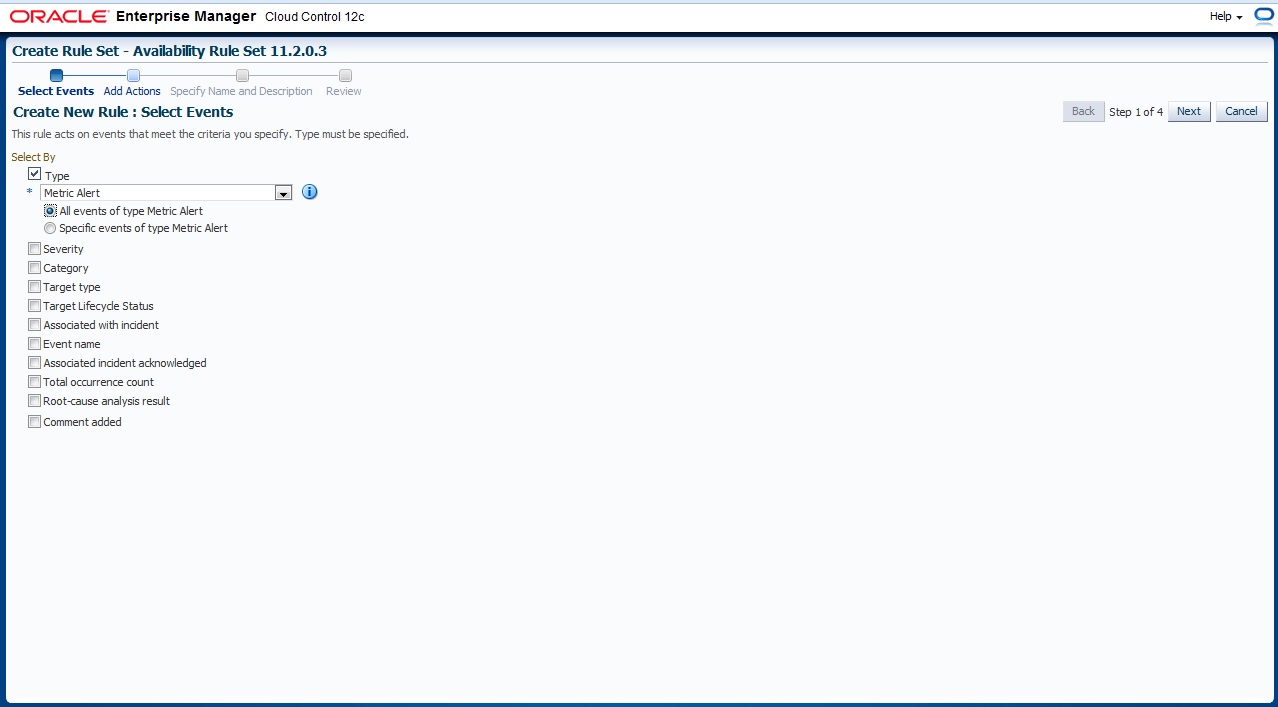
First you need to choose which type of event

As you see there’s two option below Drop box if you need to create events for all target option one your choice otherwise choose #2  and which one you want to enable 


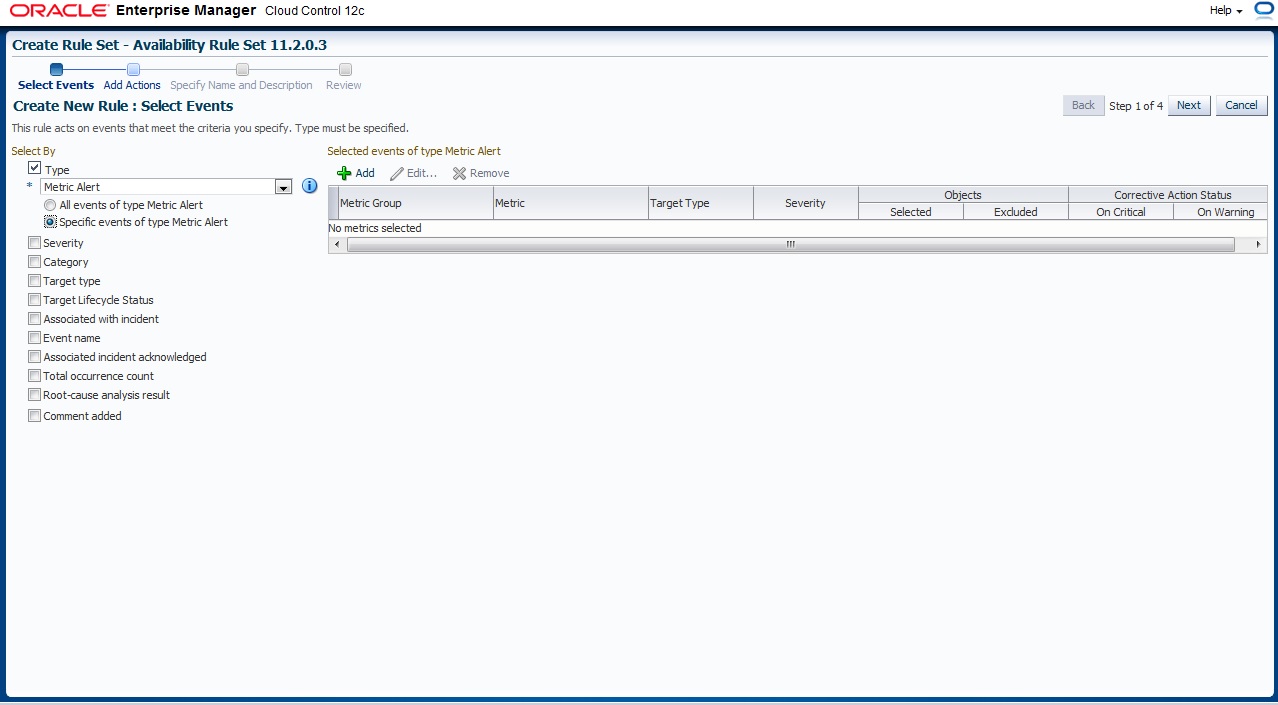
The below Picture describe what happened if you choose Option #2 

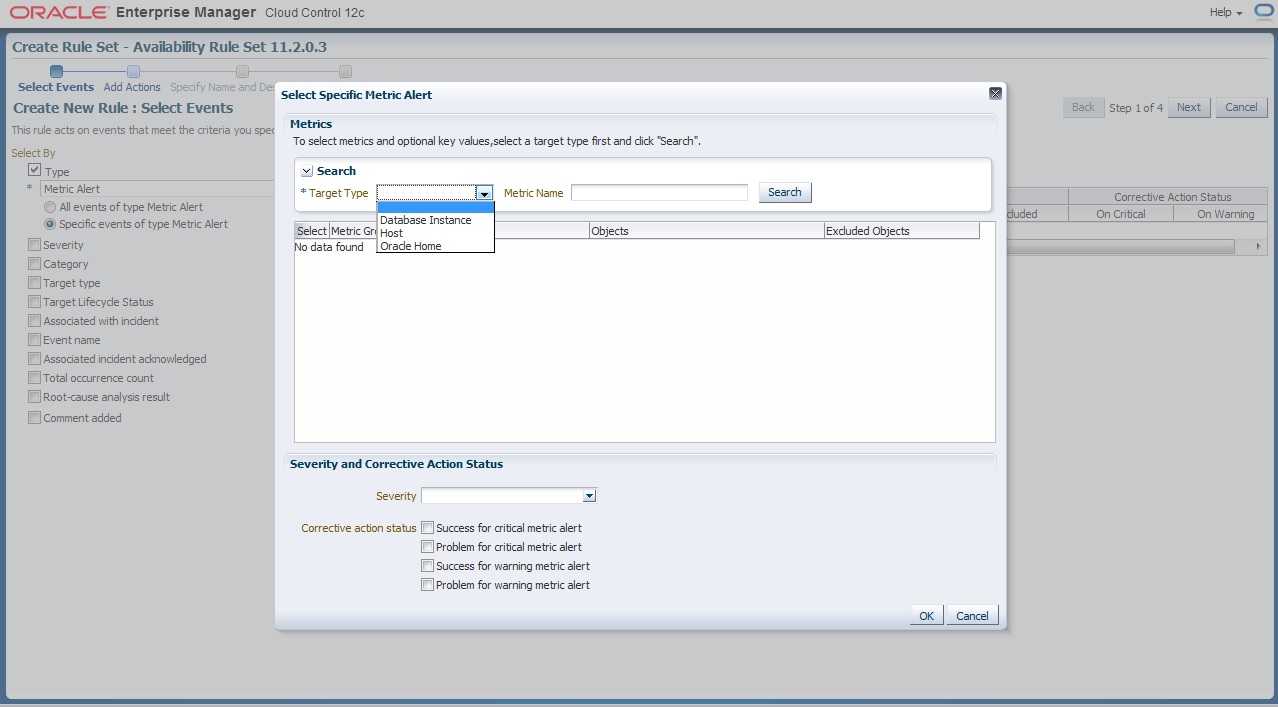
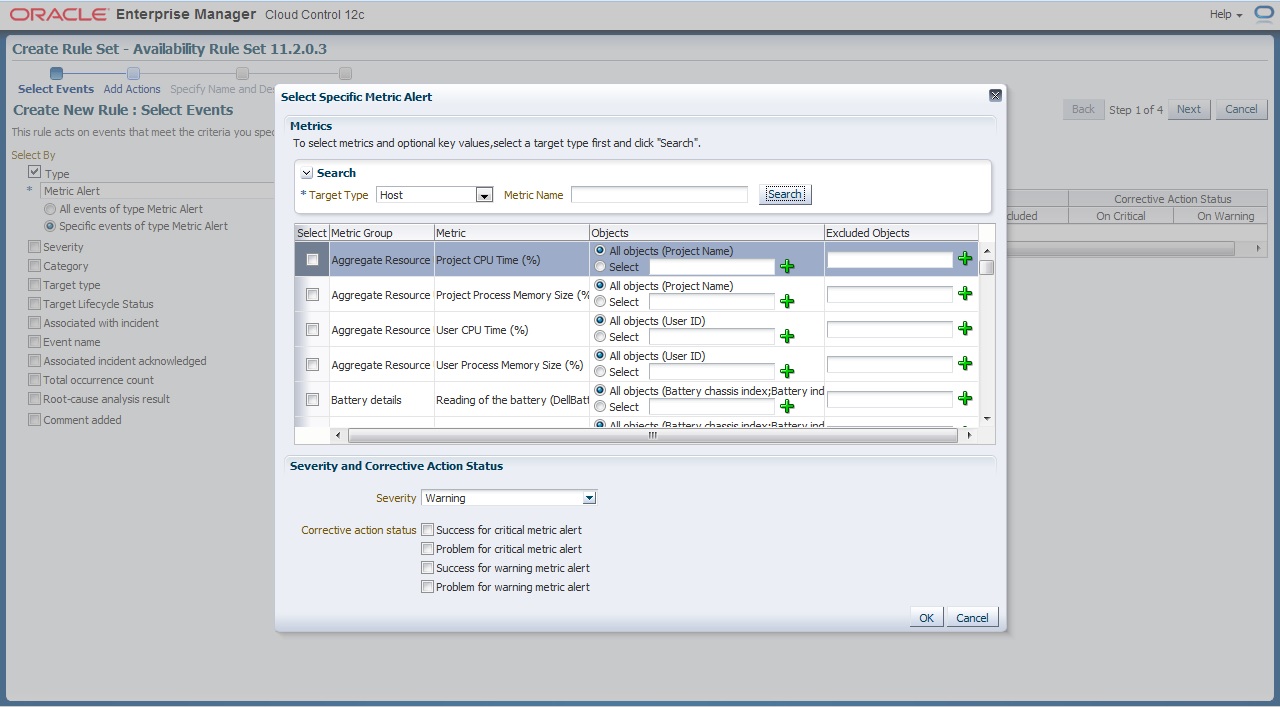
 Now what we choose before will appear to us here now you want to enable metrics for Which Target
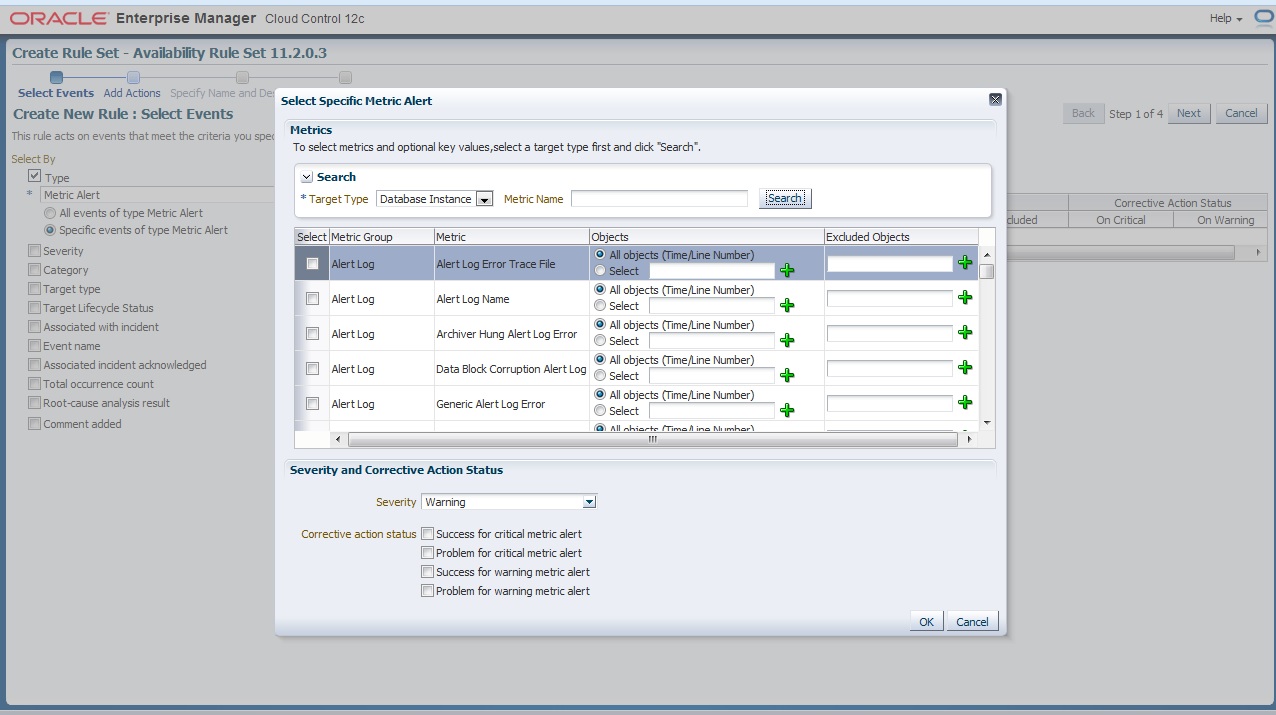
and i provide some example for predefined metrics group

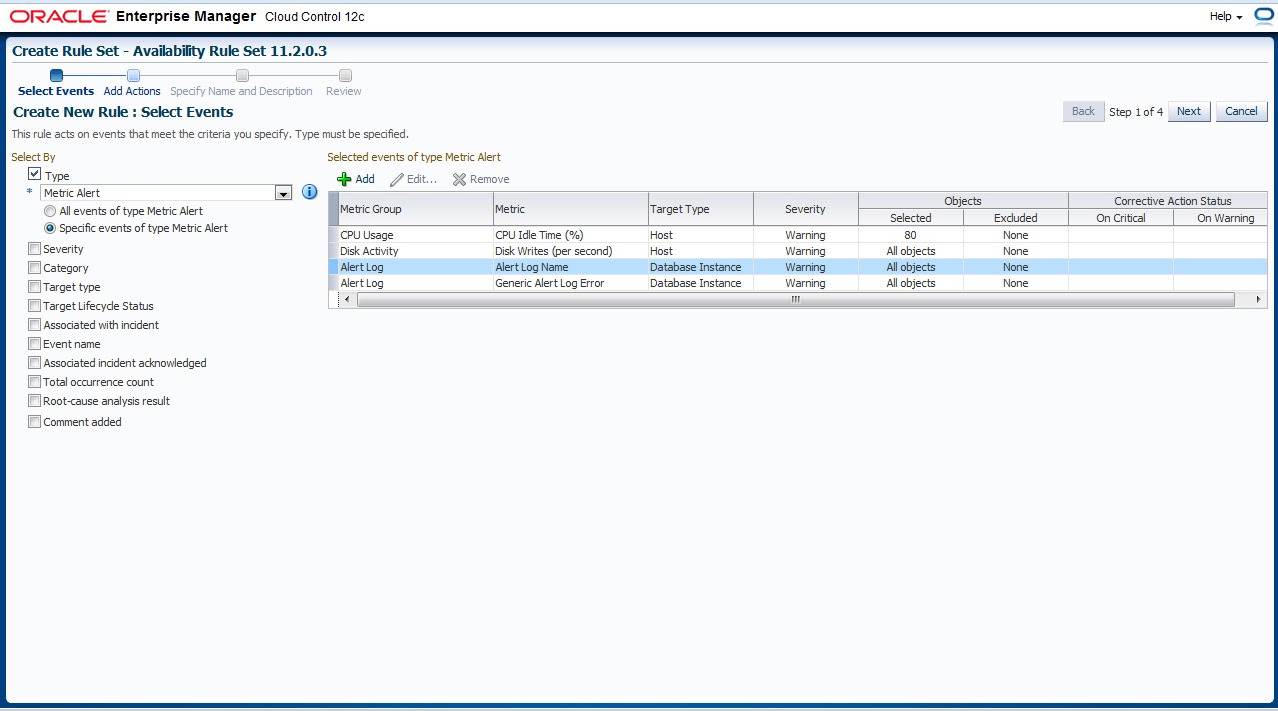
 The Overall will be look like this

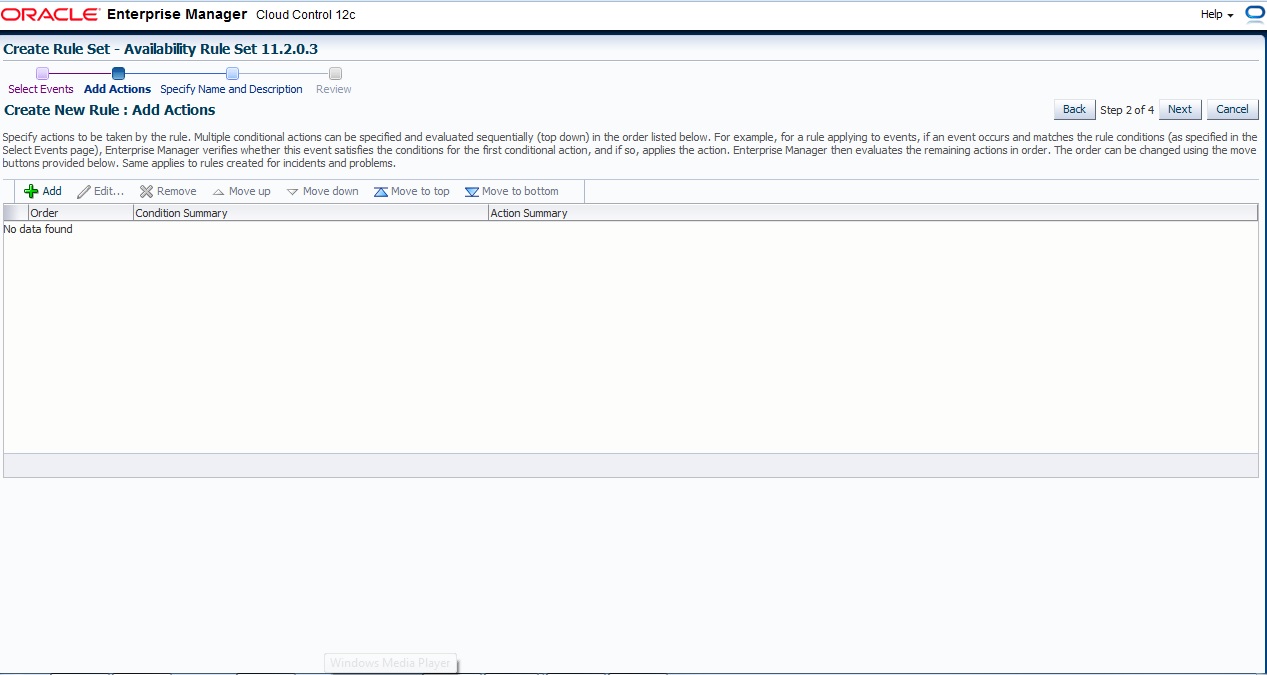
 Next , and Add Action page press add like usual

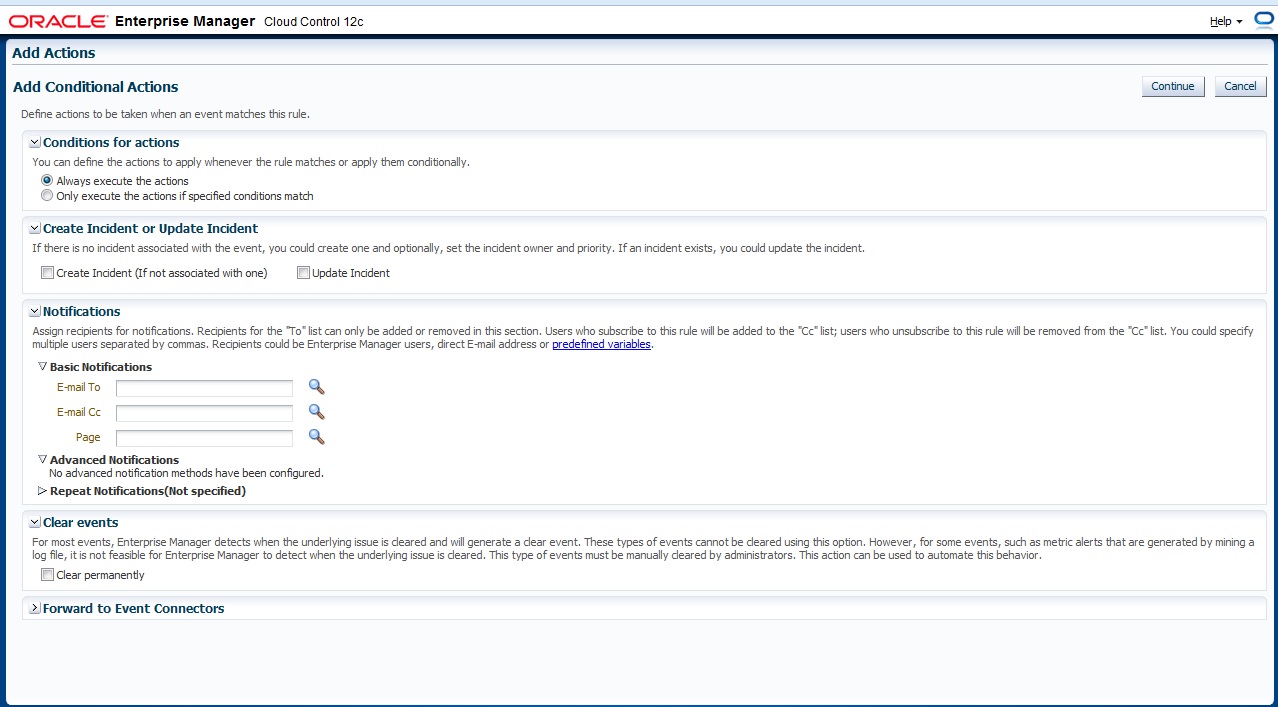
Define Which action will taken if event match

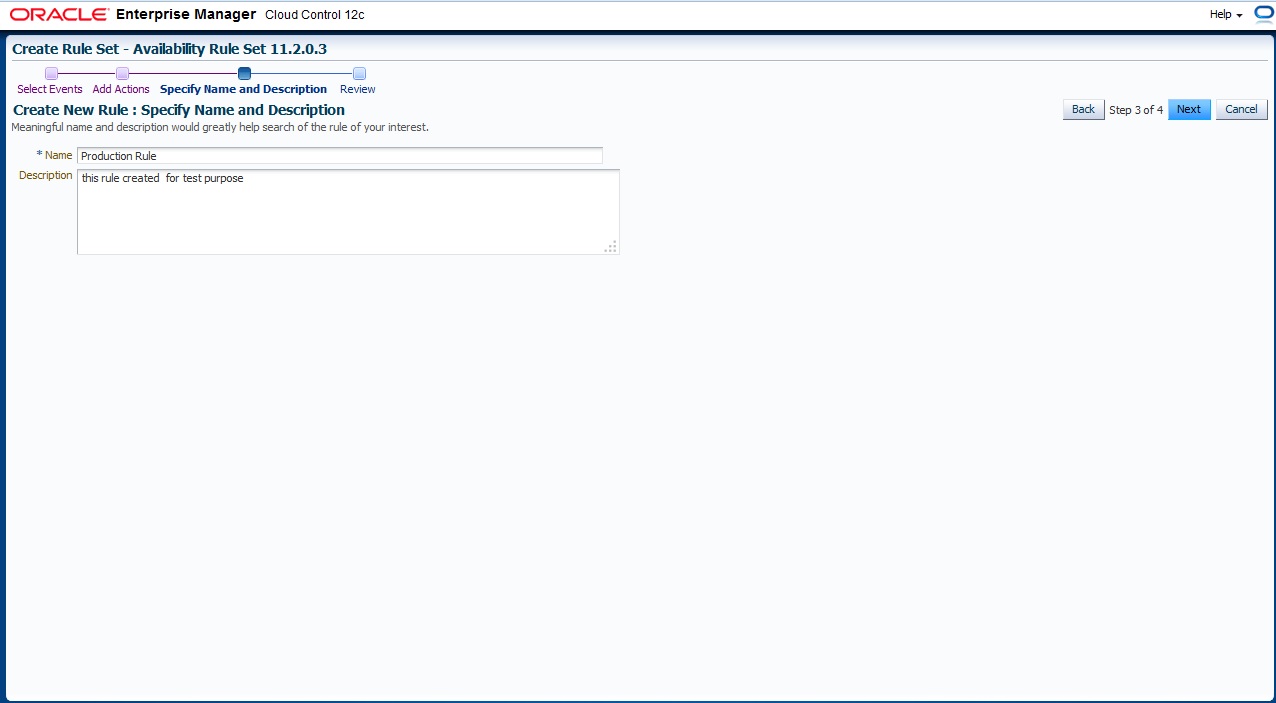
 Finally Name For Rule Set

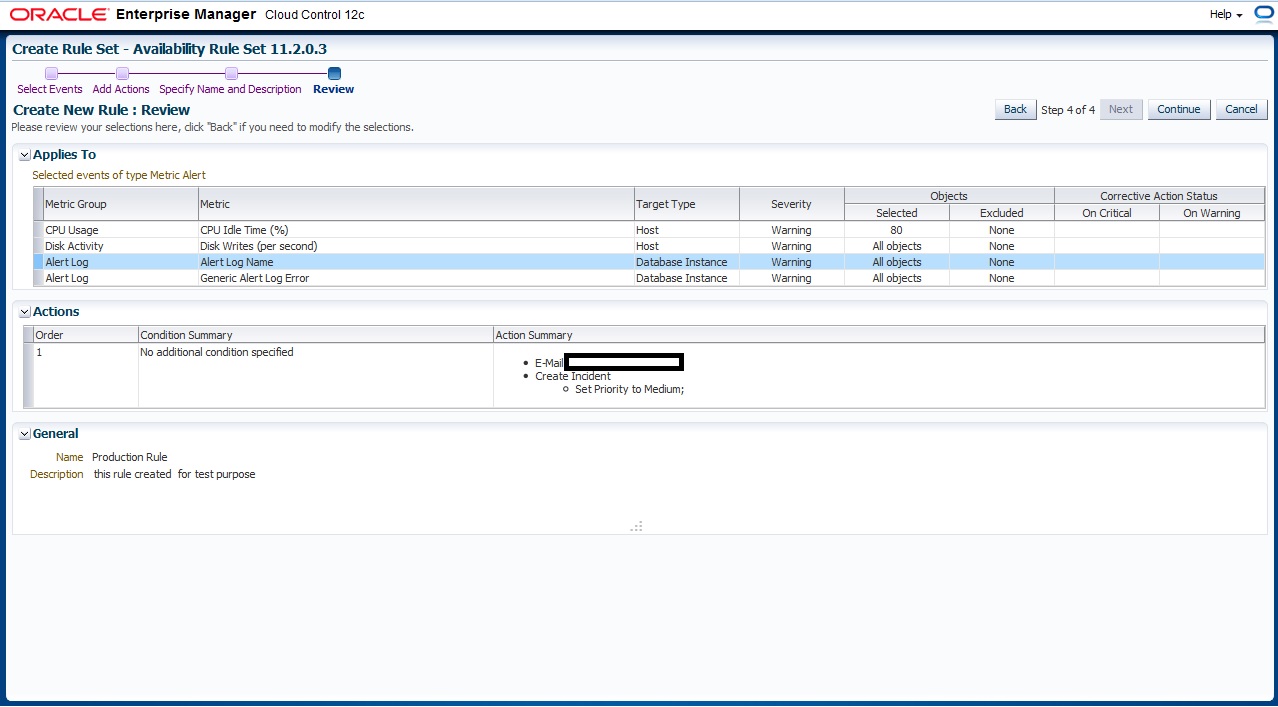
 Review Page

you can download this article from here

Thank you
Osama Mustafa

Add Target Manually / Enterprise Manager 12c

previously I mentioned how to deploy agent in enterprise manager using Auto Discovery, But today I will Post about the second way which called “Add target Manually” all you have to do is follow the screen shot and the instruction :

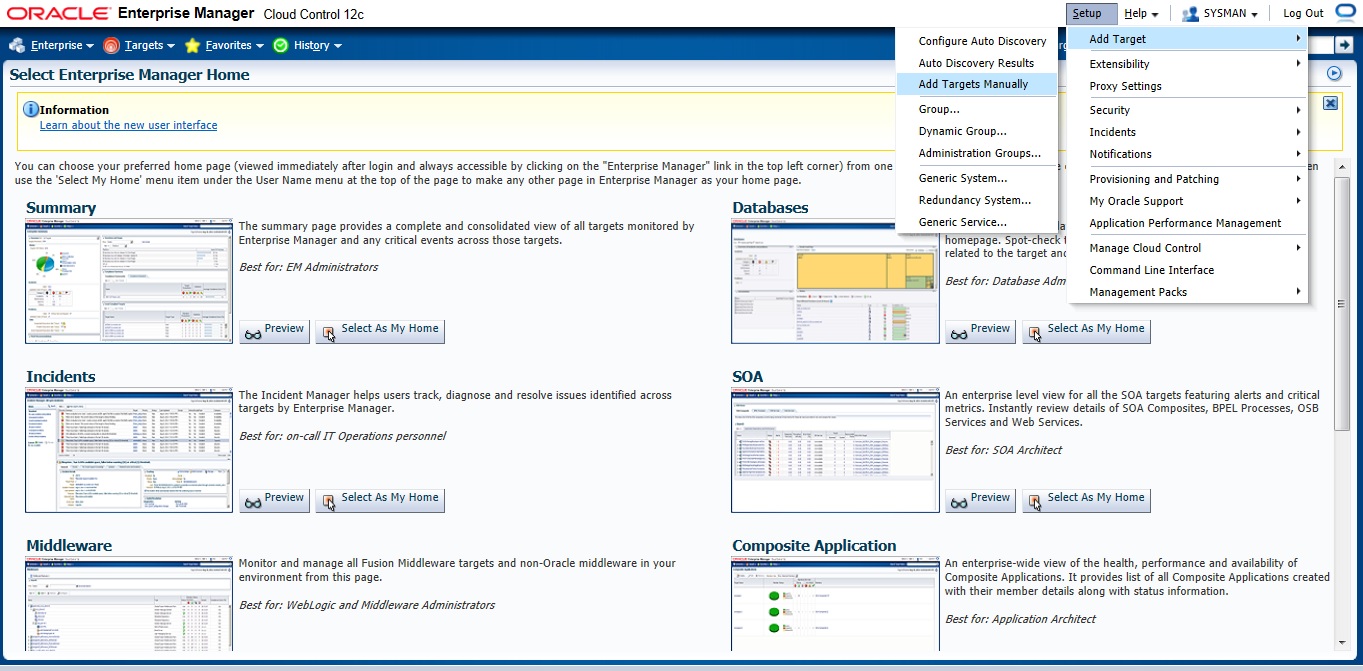
Setup –> Add target –> Add Target manually

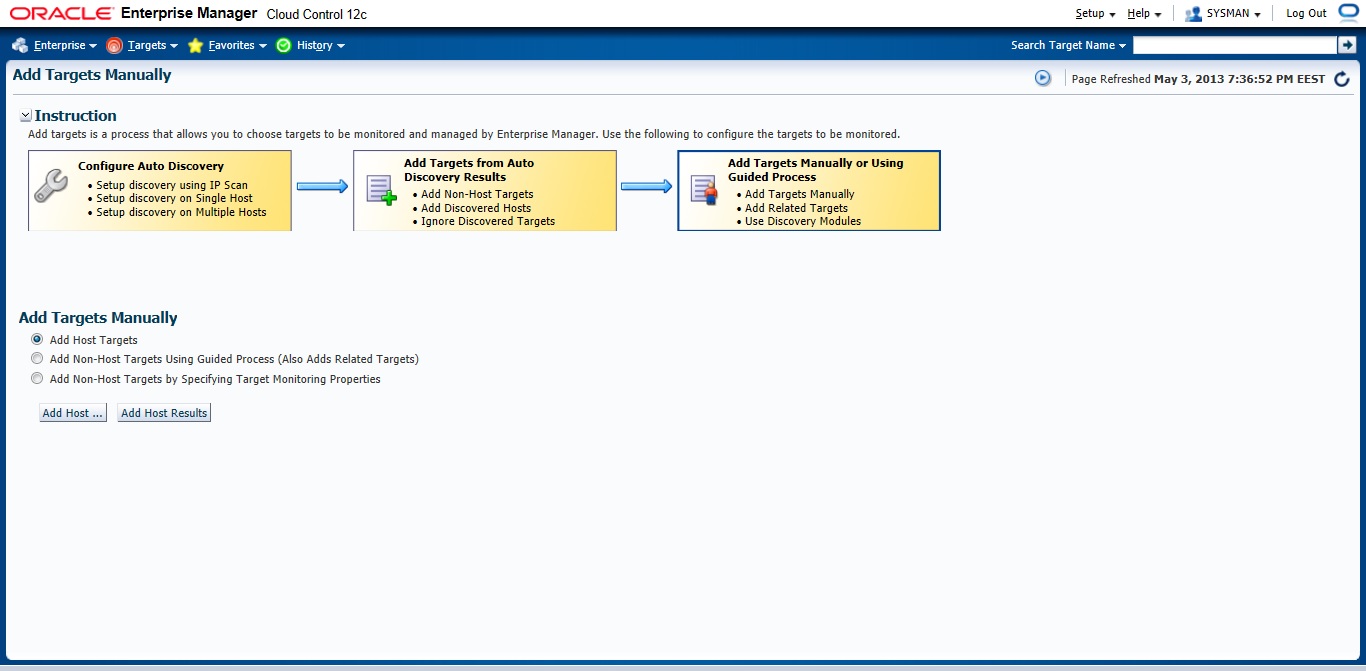
Choose the first Option

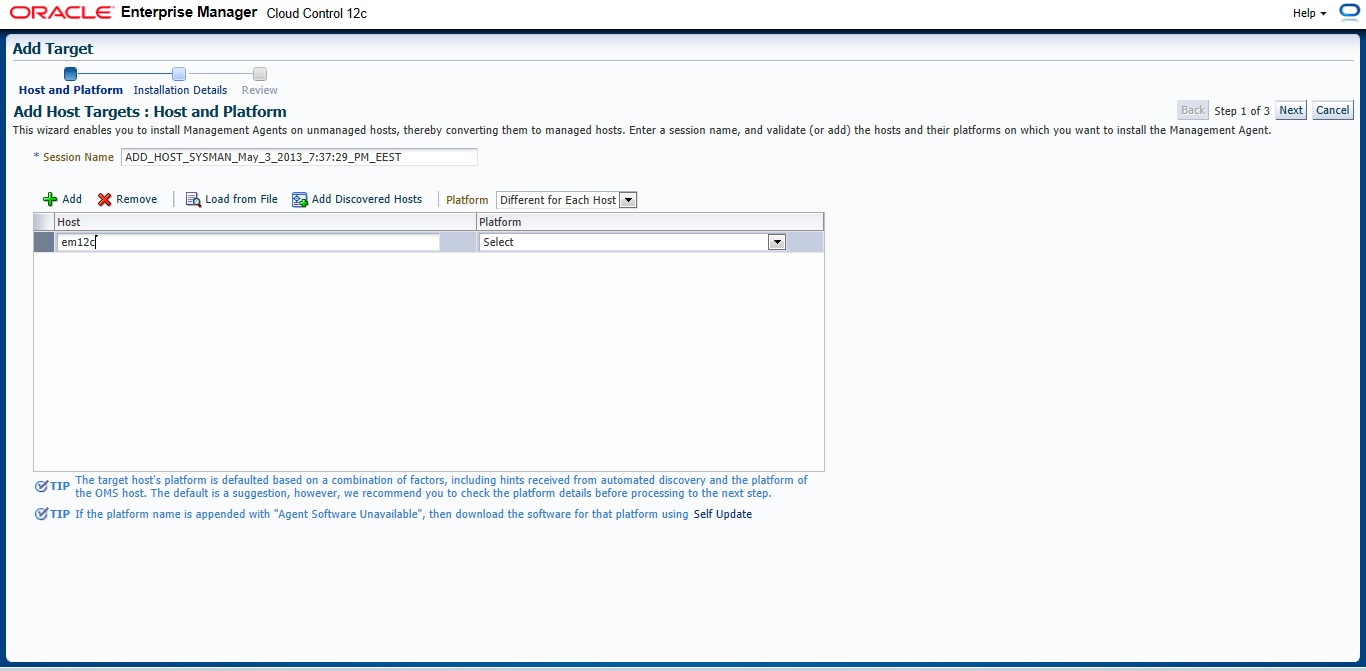
 New Page will appear — > Press add and Type Hostname for the server and which Operating system installed it on it.

Insert your Agent Path ( where you want to install agent ) and username

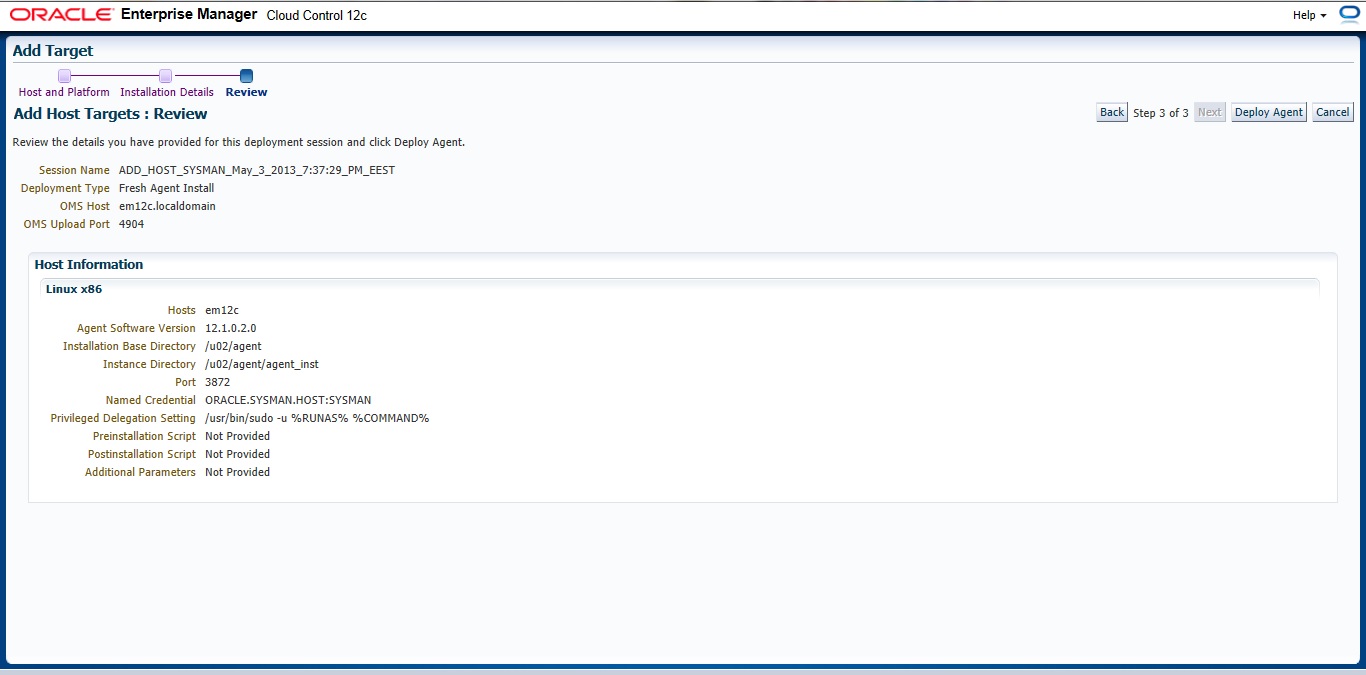
Review and then Deploy Agent

You can download this article here

Thank you
Osama Mustafa

Deploy Agent In Enterprise Manager 12c

After I post about how to install Oracle Enterprise manager ( em12c ) today i will talk how to deploy em12c agent

there’s two method to do that

1) Configuring Automatic Discovery
2) Adding targets Manually

I will describe the both 🙂 each one separately

Before deploy you need to decide if you want to use Oracle user or root user the below steps you have to do before using oracle :

[root@em12c ~]# vi /etc/sudoers

and change and add the following lines :
Comment this line :

#Defaults    requiretty

add the below line

oracle  ALL=(ALL)       ALL

and remove ! from this line :

Defaults   visiblepw

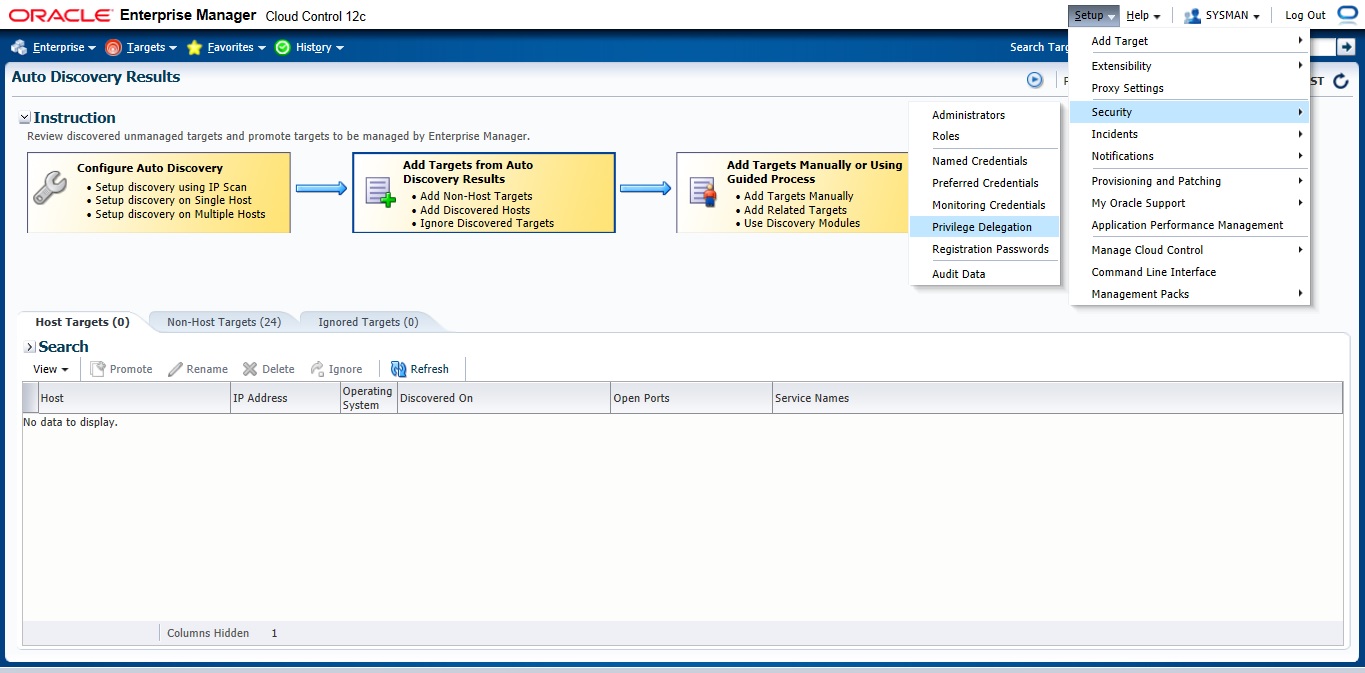
Now On em12c There’s something called privilege delegation

Privilege delegation allows a logged-in user to perform an activity with the privileges of another user. Sudo and PowerBroker are privilege delegation tools that allow a logged-in user to be assigned these privileges. These privilege delegation settings will be used for all provisioning and patching activities on these hosts.

Read more here.

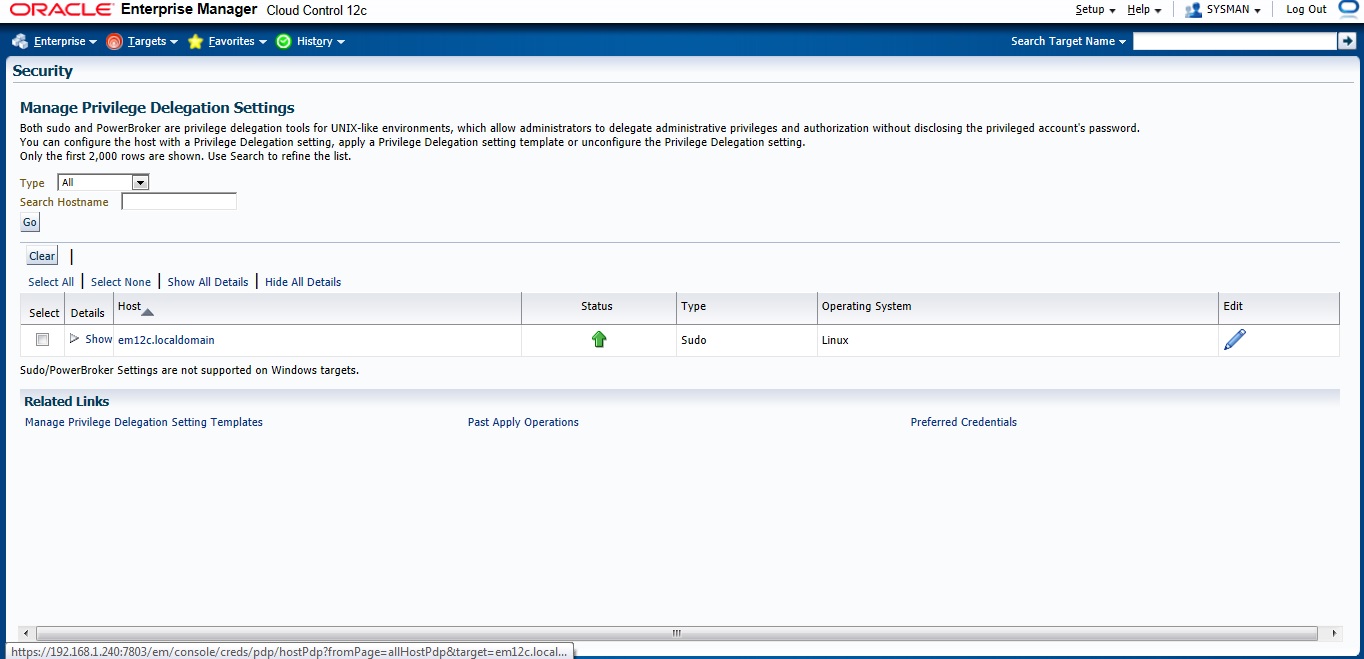
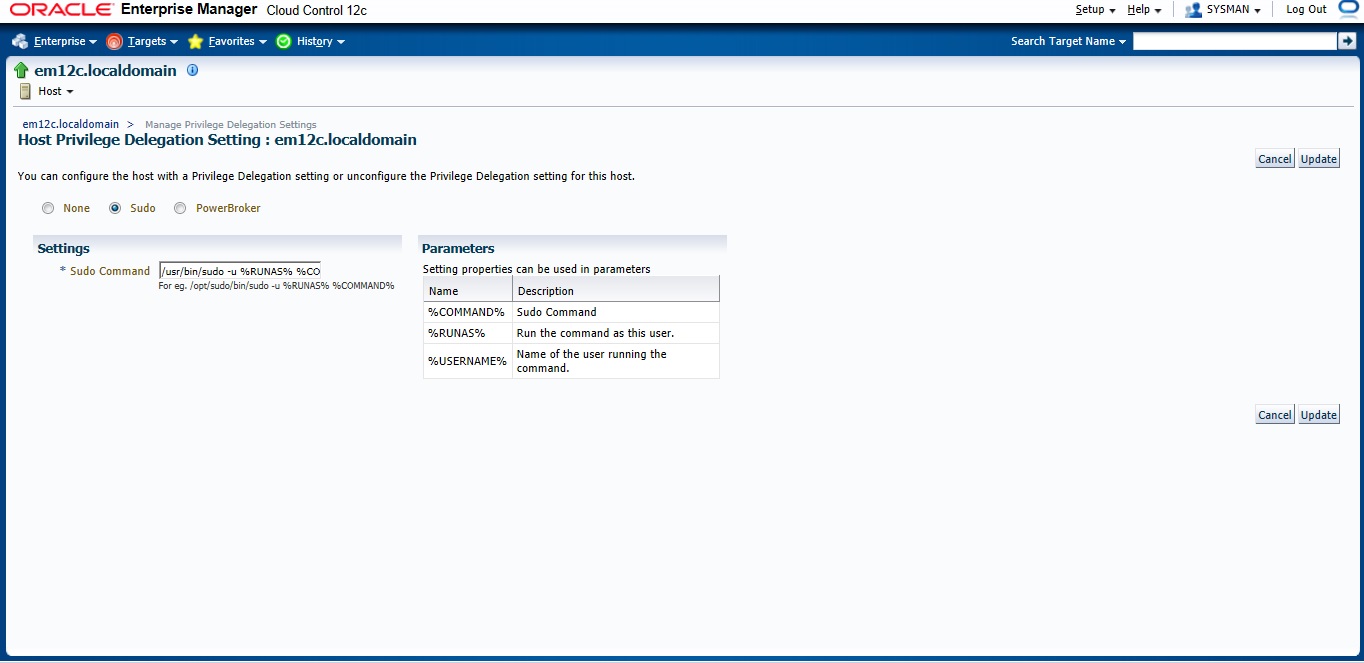
in the screen below add these lines :
/usr/bin/sudo -u %RUNAS% %COMMAND%

/usr/bin/sudo —> location for sudo command.

 after all the above steps are done let’s configure Auto Discovery

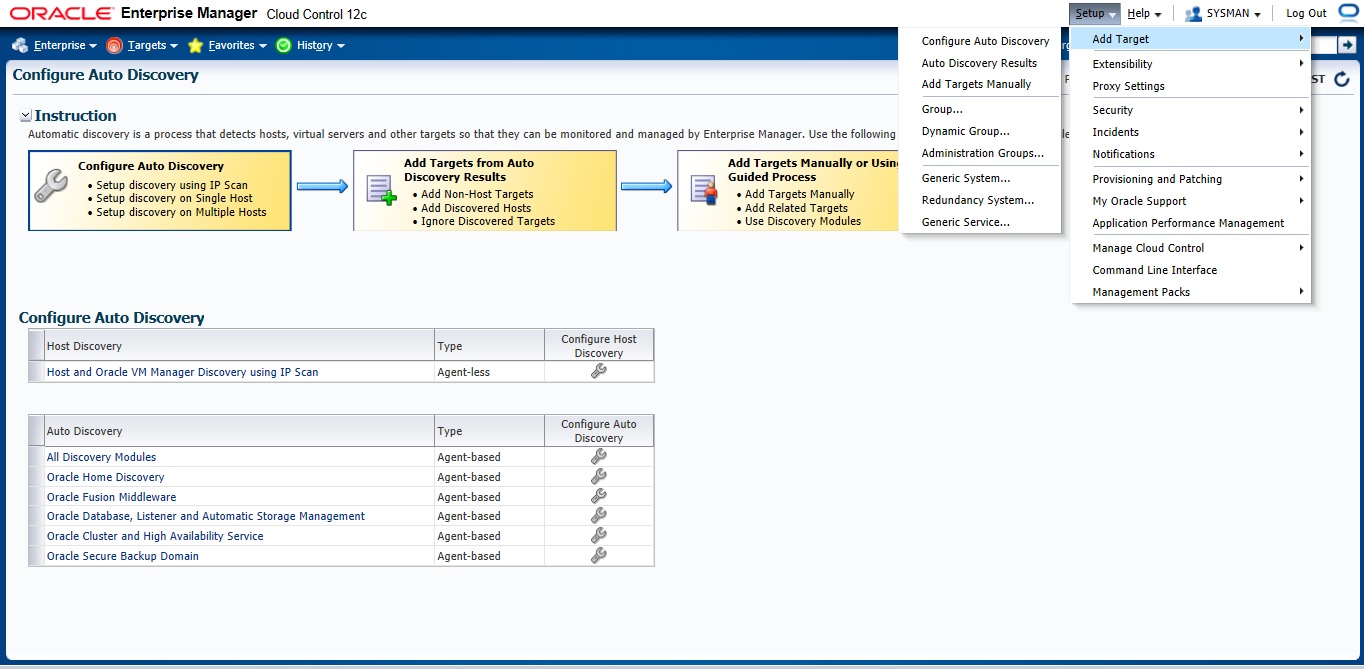
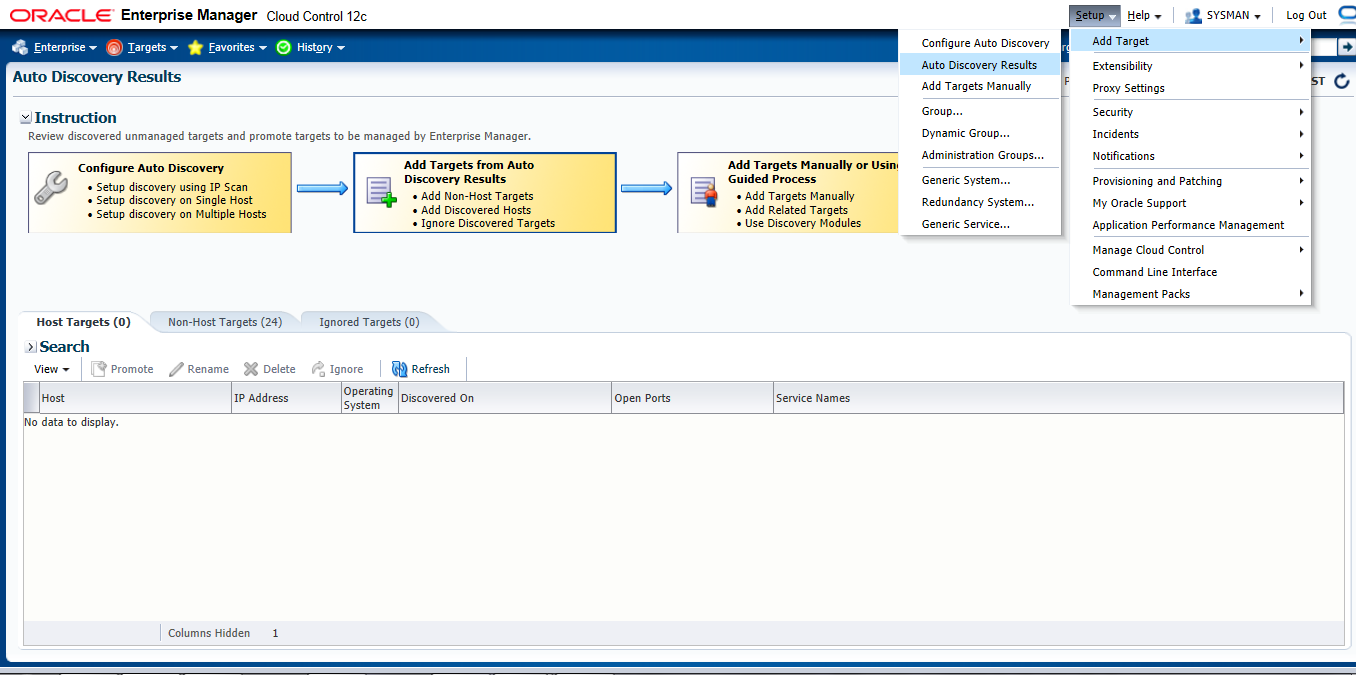
Setup –> add target –> configure auto discovery  the below screen will open, choose the first option “Host and oracle vm manager Discovery using Ip scan”

 Press create Button

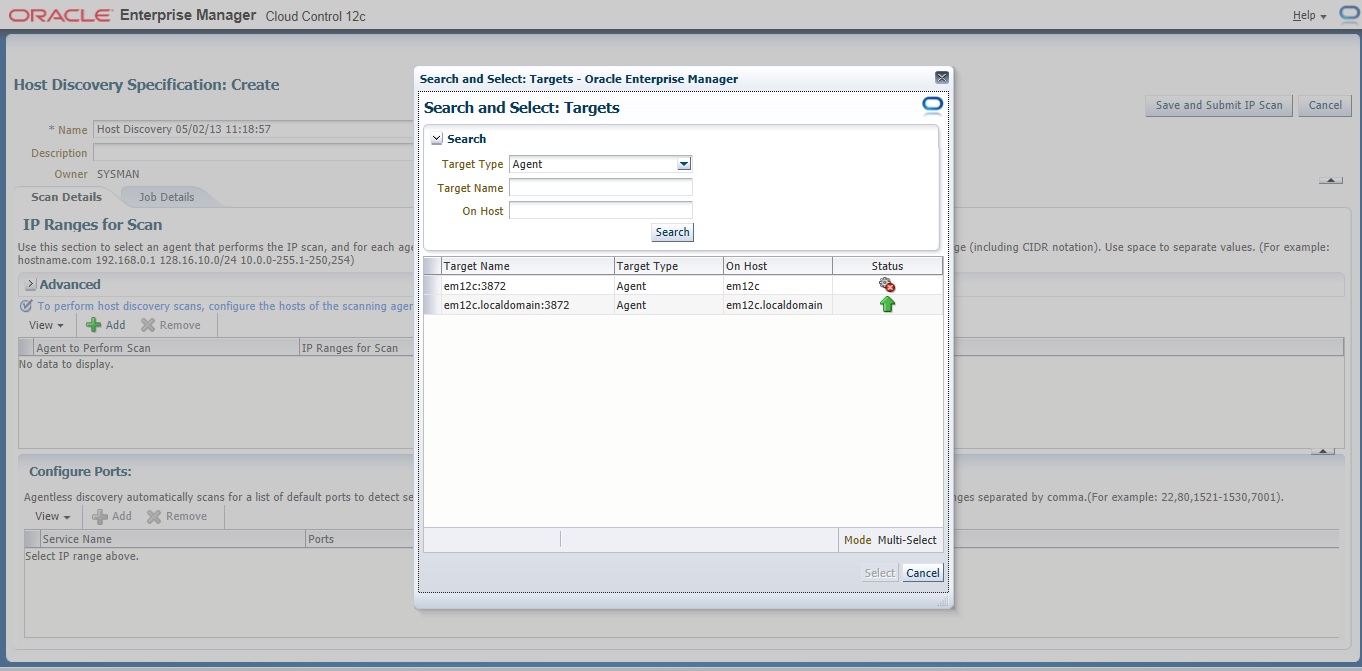
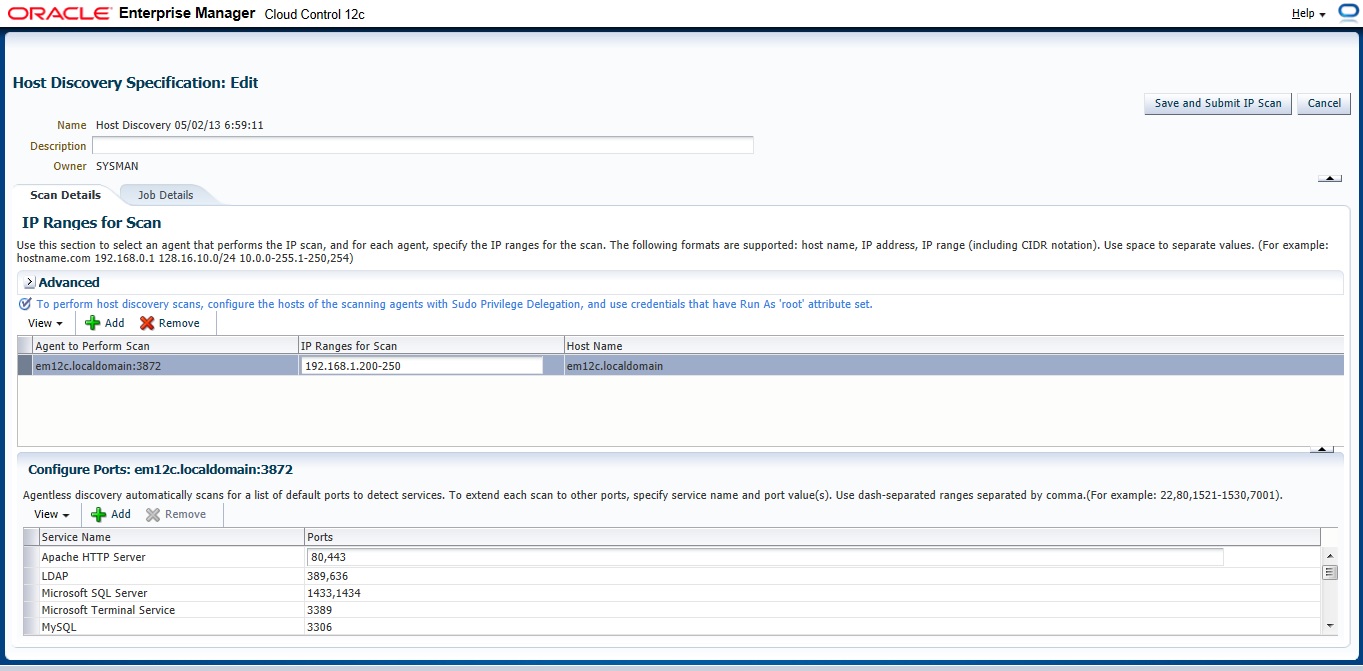
On add Button new Panel Will open , Choose your Host and Choose the Range Ip for scan The Format Mentioned above examples :

192.168.1.240-250
192.168.240/10
192.168.240,241

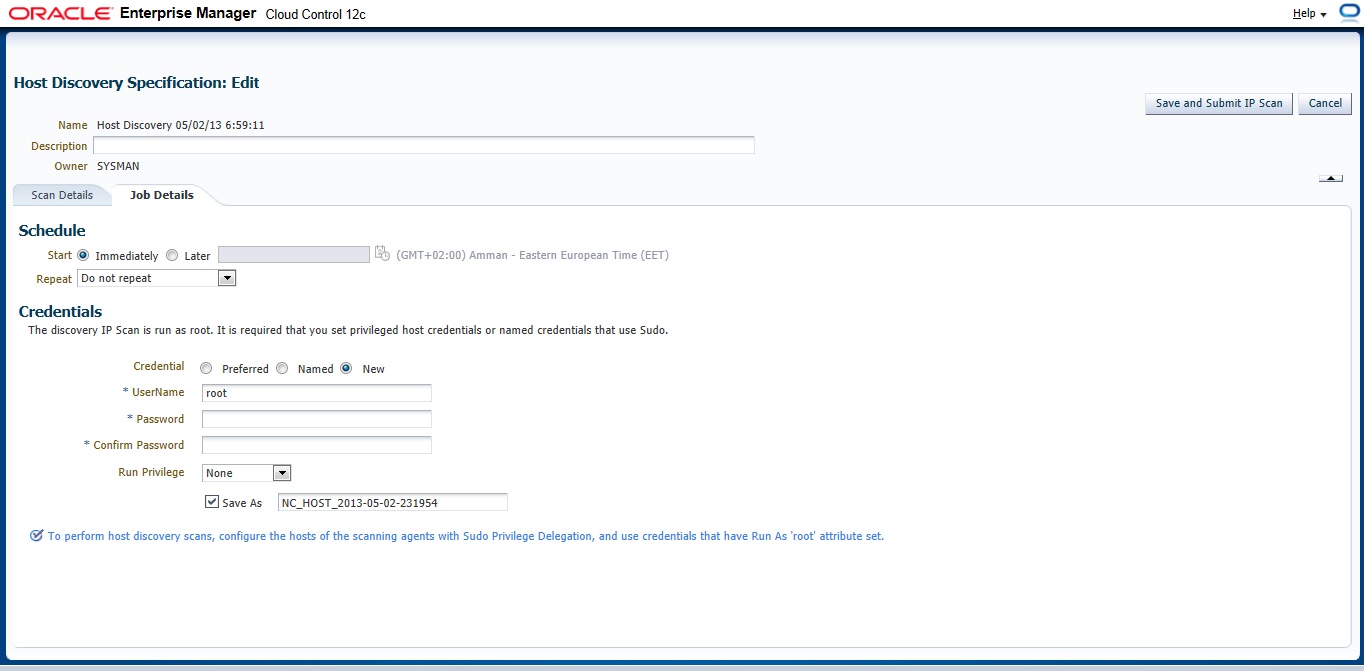
 Now you need to configure Job Summary

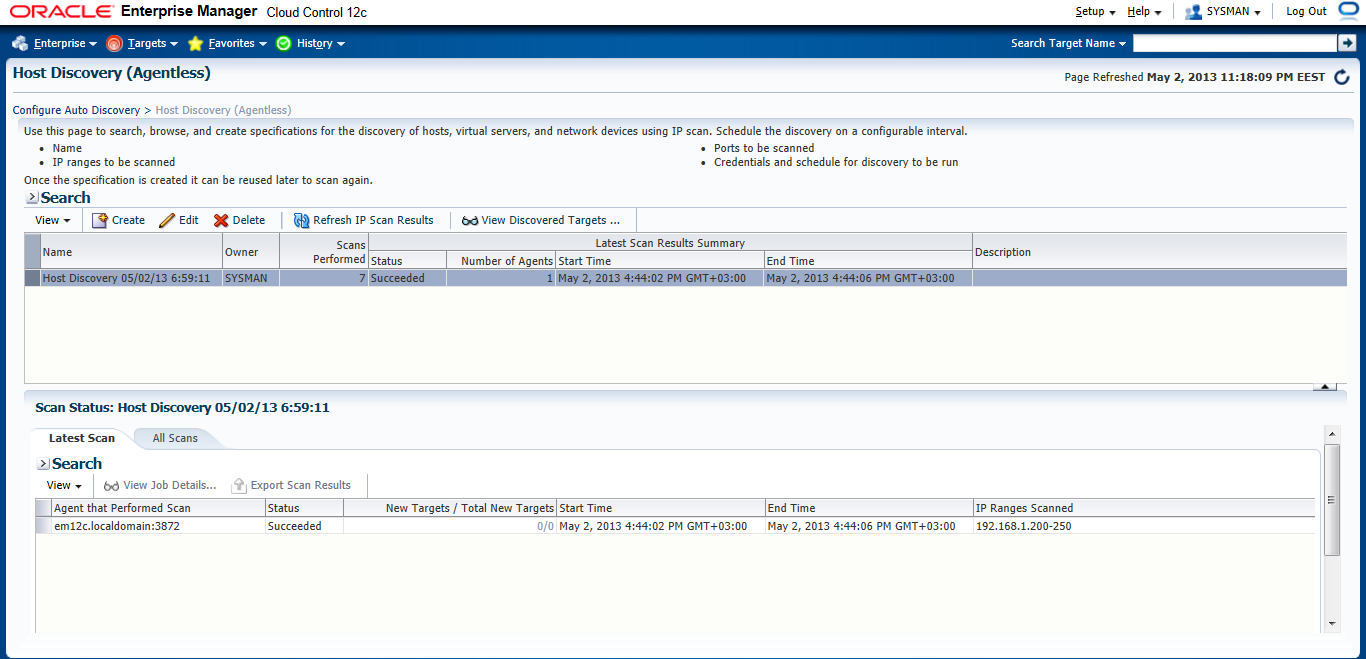
the job will start immeditaly as we choose press “Refresh Ip Scan Result” to check The result. you can check it also from here :

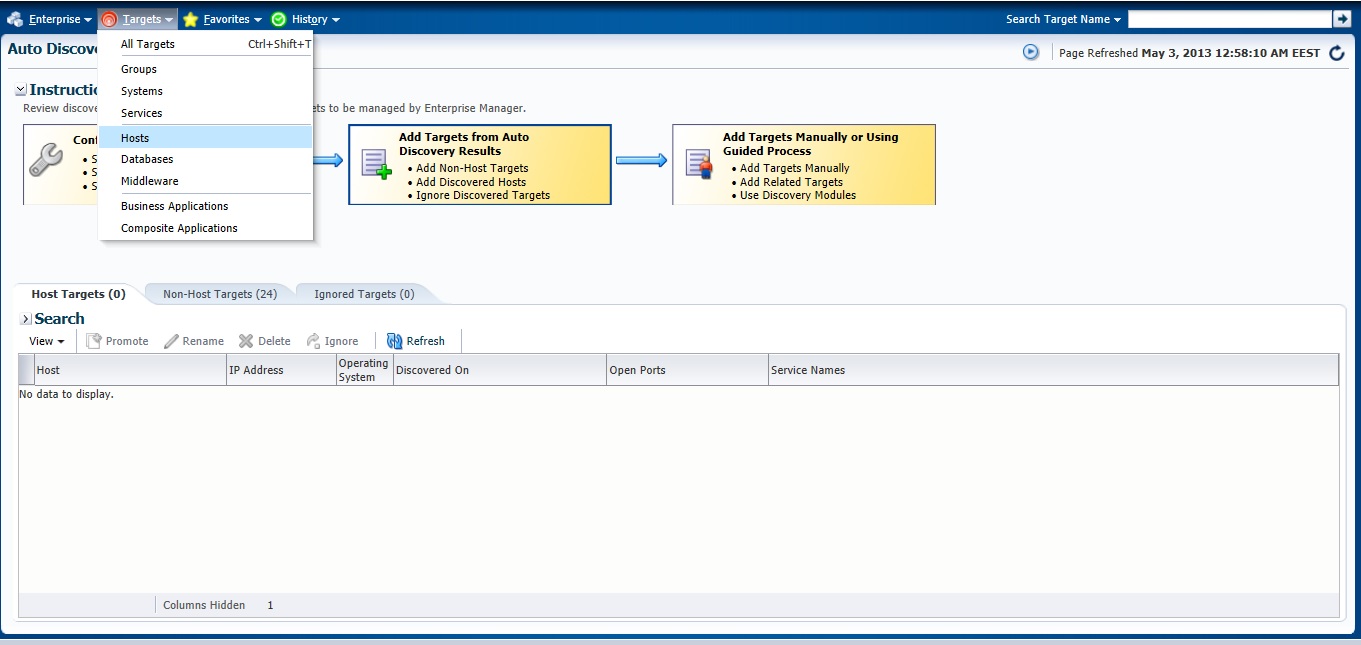
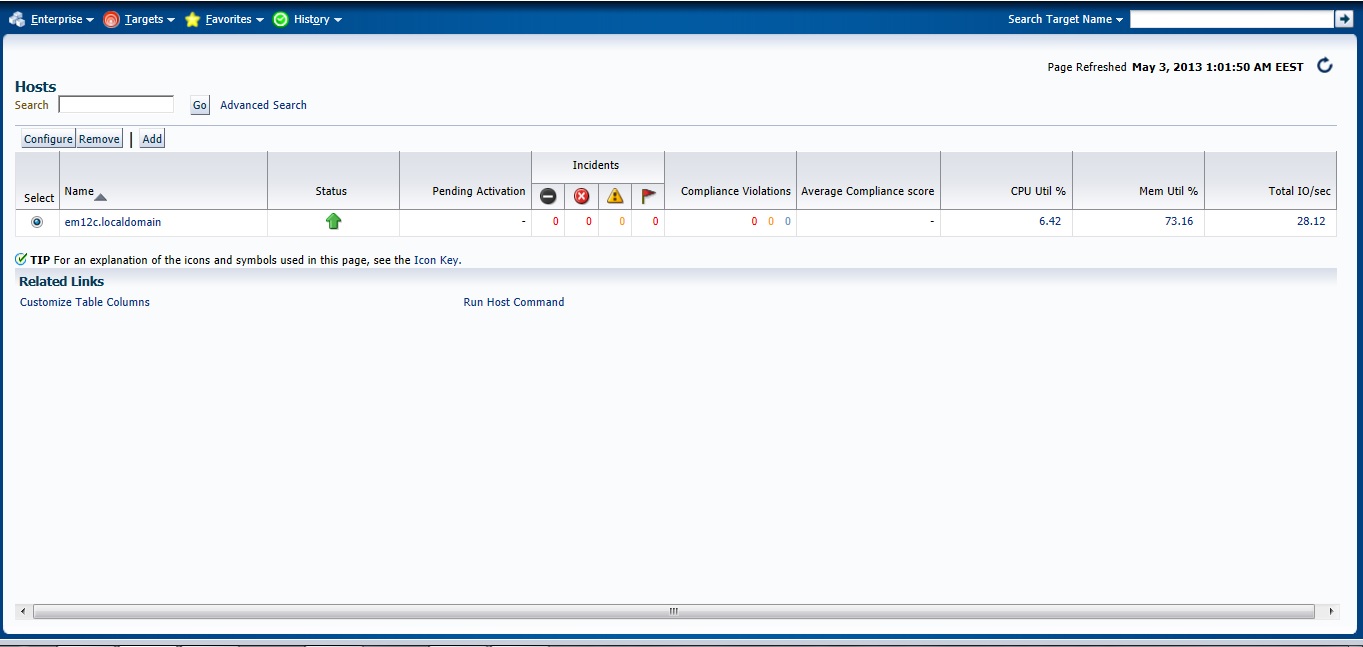
Check the Host

Next Post will be How to Add Agent Manually .

You can Download this Article From here.

Thank you
Osama Mustafa
3872 Actual Result: Port 3872 passed is busy Check complete

This error appear while trying to deploy agent for Enterprise manager 12c (em12c) and the cause for this error that port 3872 is already in use :

solution

[root@em12c Middleware]# netstat -anp | grep 3872

tcp        0      0 :::3872                     :::*                        LISTEN      2391/java    
     
[root@em12c Middleware]# kill -9 2391

[root@em12c Middleware]# netstat -anp | grep 3872

Deploy Again

Thank you
Osama Mustafa